8 – Side Dishes

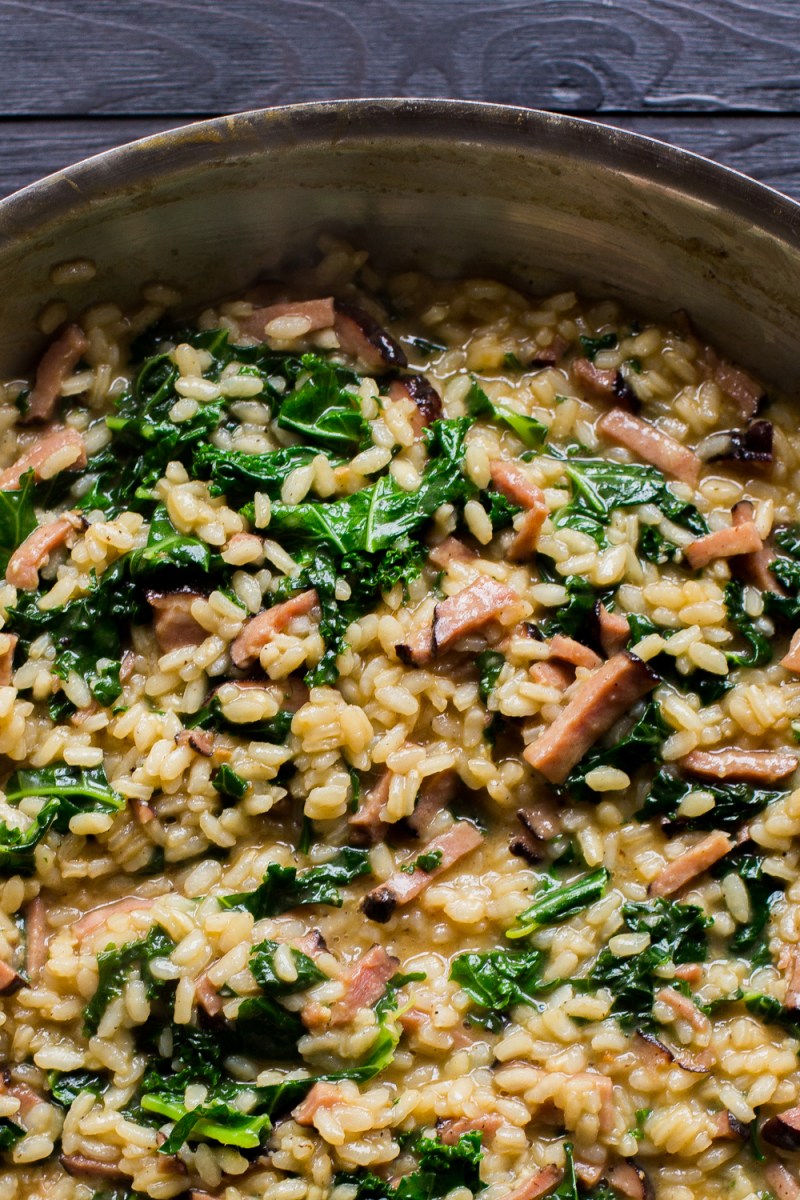
So here we are, five days after Christmas, and you’re probably wondering what to do with the leftover holiday ham in your fridge. After all, there are only so many ham soups you can make before they get tiring (and I’m a big fan of ham soups). As I was thinking about everyone’s ham problem yesterday, I put together this ham and kale risotto for lunch. I thought you folks would enjoy it as well.

Risotto is the most popular way to prepare rice in Italy, and has been around since the 1500s. The rice varieties used in risotto (typically Carnaroli, Arborio, or Vialone Nano) are high in starch and impart a creamy texture to the dish. There’s a certain technique to making risotto: you create a soffrito using fat and onion, toast the rice and coat it in the fat, pour in and evaporate wine, ladle in hot broth until cooked through, then finish with butter and/or cheese.

The risotto-cooking process requires almost constant stirring in order to loosen up the starch and to keep the rice from sticking to the pan, so expect to spend a lot of time in front of your stove when making this dish (I usually grab a book or watch some Netflix on my phone). As an added bonus, your arm will get a bit of a workout along the way.

Read Full Article

Earlier this year I wrote a guest article for Paleo Magazine, emphasizing the importance of eating vegetables. Americans tend to give vegetables a lower priority than the rest of the world; when comparing the most economically developed areas of the United States (those with the most money to spend on food) to similarly developed regions in Europe and the Western Pacific, we only eat about 75% as many vegetables as the other regions. Comparing the lesser economically developed areas of the United States to their global counterparts is much worse: there, we eat only around 35% as many vegetables.

Vegetables are an important factor in overall health. While not as nutrient-heavy as organ meats, fish, seafood, and naturally raised ruminants, they are often superior to pork, poultry, and fruit in terms of nutrient density. Fermented vegetables, a food that has been consumed for thousands of winters, also provide unique and essential forms of probiotic bacteria and increase the bioavailability (ability for us to absorb their nutrients) of vegetables.

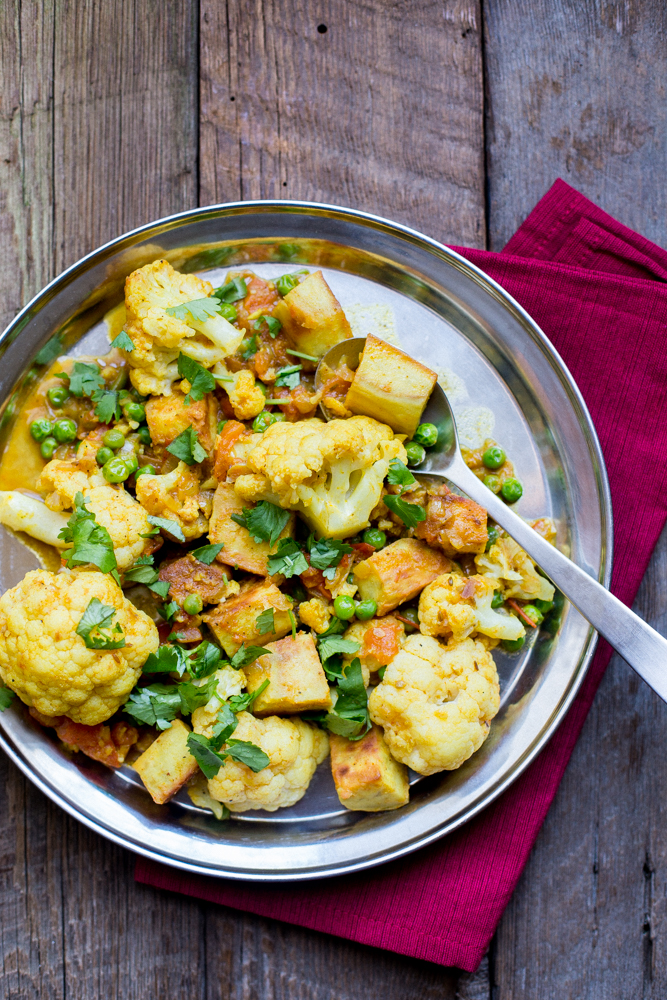
Aloo Gobi Matar is Punjabi dish, and an excellent example of the potential tastiness and diversity to be found in a vegetable dish. Using a small amount of many vegetables will give your dishes deeper flavors and will make you less likely to tire of certain foods. If I ate just tomatoes every day, I’d get sick of them; adding a tomato or two to several dishes in a row wouldn’t have the same effect.

Read Full Article

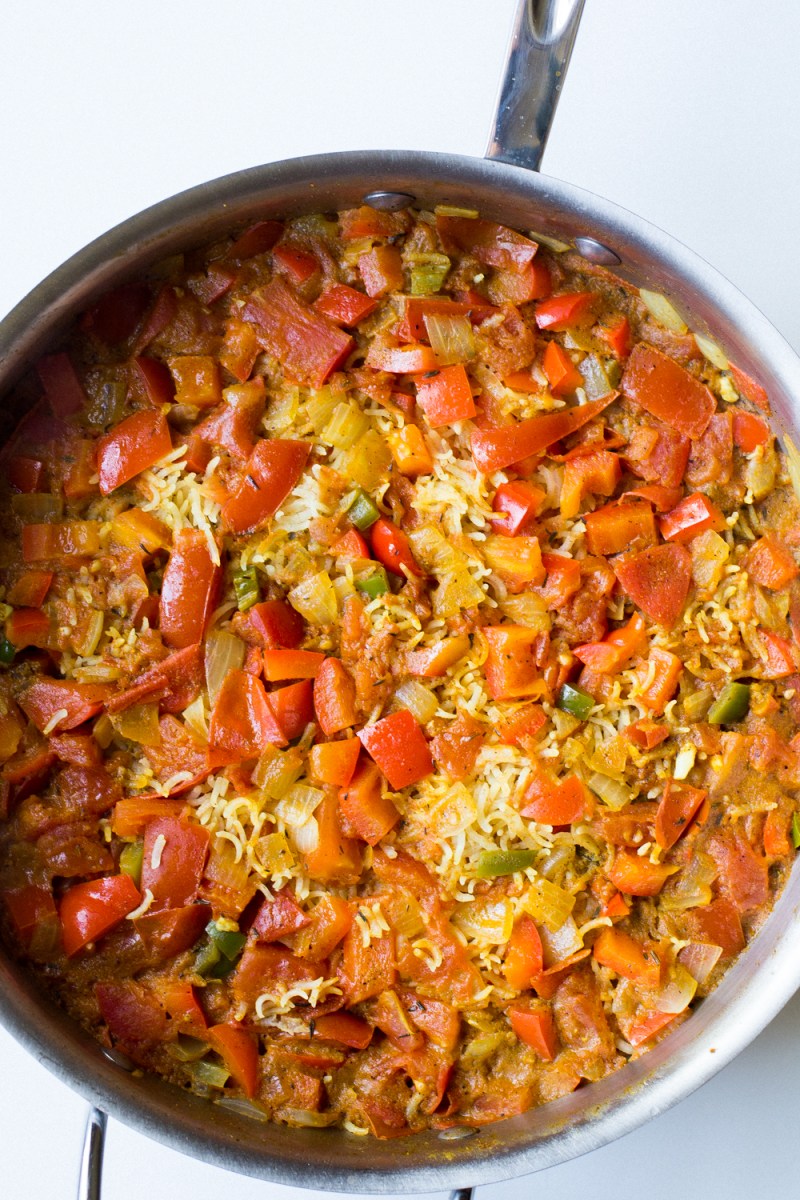
You know, for being a guy who’s so pro-rice in the Paleo community, I have relatively few rice recipes out there. Sure, there are a bunch in my cookbook (the Dirty Rice recipe is my favorite), but considering the fact that we eat rice several times a week it should be better represented. So here’s a recipe.

Jollof Rice is a dish originally prepared by the Wolof people of Senegal and The Gambia, which has expanded to the rest of West Africa since. It is characterized by its addition of tomatoes and onions, and is put together in one pot – its other name, Benachin, means “one pot” in the Wolof language.

Wondering how rice fits into a Paleo-style diet? Read a bit about my take on it in this recipe from earlier this year.

Read Full Article

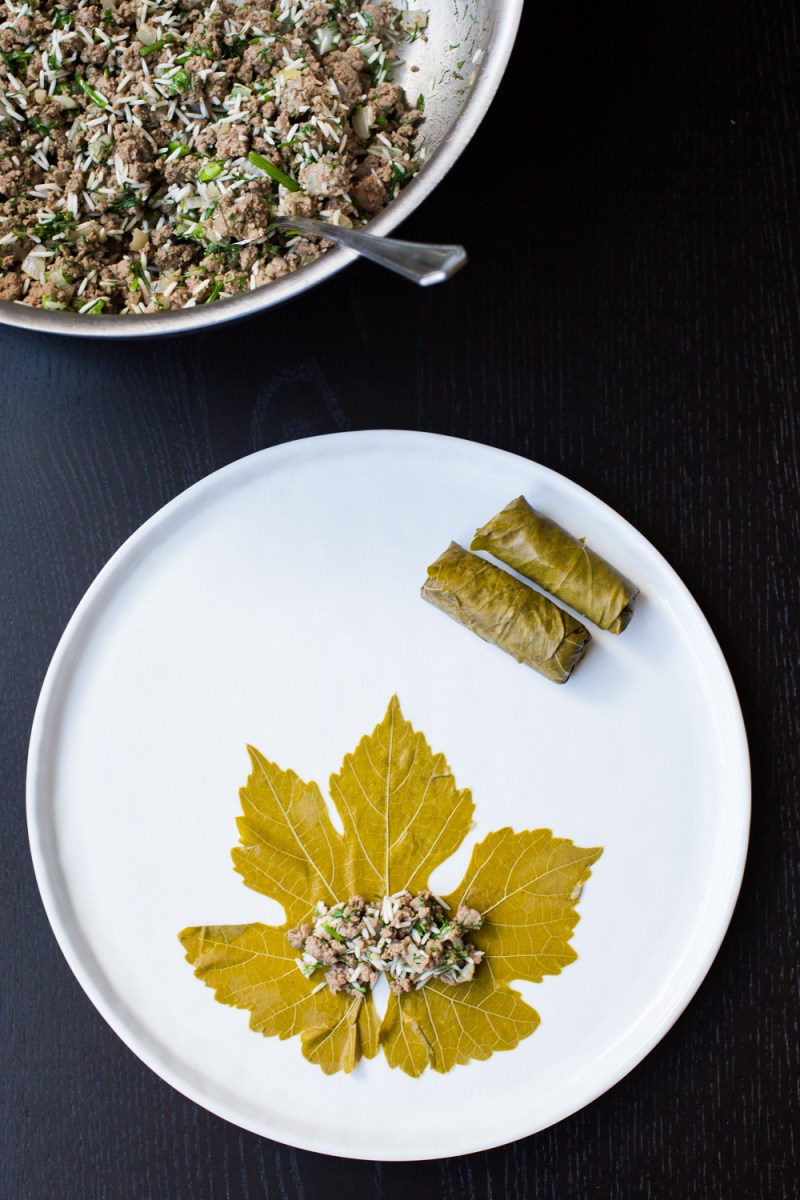
Dolma are stuffed grape leaves, originating in Turkey but expanding all over the Mediterranean, Middle East, and beyond. Their filling can be anything from tomatoes, to eggplant, to meat – really, you can’t go wrong with stuffing these little guys. This particular recipe is the Greek variation, called Dolmathes (an interesting use of Greek plural endings in a foreign word); they are made with rice, ground beef, and fresh herbs. And lemon juice! A whole lemon’s worth. The resulting flavor is both sour, salty, and rich, and is a perfect party dish to accompany other finger foods.

I was first drawn to this dish because it’s a one-stop-macronutrient-shop; it’s equal parts carbs, protein, and fats, ending up in a deeply satisfying experience. The only break from the norm that I adapted in this recipe was to cook the rice in chicken broth instead of water, in order to increase its nutritional profile and tastiness.

Before we move on, let’s have the white rice talk again. As you may know, I find rice to be a perfectly healthy and Paleo-friendly food, since it is very low in toxins (compared to brown rice, and even some common Paleo foods, like coconut). Common questions I get: But what about its glycemic load? Basmati rice (like in this recipe) has a very low glycemic load even compared to other rices, and when paired with protein, fats, and acids, it’s further reduced, and significantly so. But what about arsenic? There are some studies that show there is arsenic in rice, but the amount of arsenic in rice is lower than the arsenic found in other foods (3x less than what’s found in drinking water, for example). But it’s nutritionally poor? Cook it in broth, like in this recipe!

Anyway, those are the most common rice questions I get – be sure to leave more in the comments below if you have any. At the end of the day, I think that white rice is a good thing to have on the table; it’s delicious, and if having a bit of rice as part of a meal helps keep cravings for other (unhealthier) foods at bay, go for it – provided you tolerate it well.

Read Full Article

Mofongo is a Puerto Rican dish made with fried and smashed plantains. It is related to the West African staple starch dish called Fufu, originally made with yuca; slaves sent to the Caribbean originally brought this dish across the Atlantic.

Fufu made it into several Caribbean cuisines, with varying levels of alteration. In Cuba, it is known as Fufu de Platano, and in the Dominican Republic it carries the name Mangú. In Puerto Rico, it is almost always made with plantains, but yuca and breadfruit variations exist. The plantains are typically smashed using a wooden mortar and pestle called a pilon, and sometimes served directly in the pilon. My stone mortar and pestle gets the job done nicely.

There are many ways to enjoy Mofongo. It is often dipped in chicken broth or a sauce made with mayonnaise and ketchup (aptly called “mayoketchup”), or served with a tomato-based sauce and grilled or sautéed shrimp. Personally, I enjoy it plain, as a simple starchy side dish, which is what you’ll find in this week’s recipe.

Read Full Article

Ital stew is a Jamaican dish aligned with the Rastafarian movement. The word “ital” is derived from the word vital, and is similar to the concept of kosher. Specifically, ital food should be vegetarian, unprocessed, and from the earth. Some believe that even iodized salt should be avoided, and only pure sea salt is acceptable. Since meat is considered dead, it is not ital, although some Rastafari are known to eat small fish.

Like in my Callaloo recipe from earlier this year, there is a lot of variation to this dish. Typically, it’s made with several different kinds of starchy foods (I used squash, taro, potatoes, and plantain) in a coconut milk broth. You don’t never every single starch to make a flavorful stew – just use what you have available to you. It’s lightly spiced, with just thyme and pimento (allspice).

Funny enough, when doing my research I discovered this dish isn’t considered an exceptionally tasty stew, to the point that I was almost turned away from trying it. I have a suspicion that the reason it’s not well-received is because every recipe I found had you adding all of the vegetables at once, which likely resulted in a mushy, jumbled, and slightly confusing stew. I tried a different tactic, and added the dishes in increments so that they all were perfectly cooked at the end of the recipe. This extra care made a huge difference in the final product; in fact, we’re adding this dish to our regular rotation because it’s easy, quick, and hearty – a perfect summer soup when you’re not in the mood for a meat dish.

Read Full Article

My second recipe of the week also comes from Southeast Asia, this time from Malaysia. Sambal Terung is a roasted eggplant dish, covered in sambal (a spicy chili-based condiment). Like Tuesday’s recipe, this is a dish that comes together easily and would allow me to focus on the main dish of the night (in this case, I was going to make Beef Rendang). I personally like this dish because it carries a deep, exotic flavor with minimal hands-on time; you’ll mostly spend your time soaking and roasting the eggplants.

Sambal has its origins on Java island in Indonesia, traditionally made with 75-90% chiles and a few other ingredients (shrimp paste, salt) added for depth of flavor. The sauce spread to other countries, most notably Malaysia and the rest of Southeast Asia (I have a theory that Sriracha is a product of sambal influence, but it’s hard to say for sure); it also made its way into Europe due to the Dutch colonization of Indonesia in the 17th century and beyond.

Eggplant was first grown in the Indian subcontinent, and spread both East and West from there. It reached China around 500AD, and was wildly popular in the Mediterranean starting in the Middle Ages and continuing today. It wasn’t accepted in Europe until later, around the 17th century, as it was originally considered by Europeans to be poisonous. Because of its widespread use in early history, the words for eggplant itself are all over the place, with no one single root spreading to each language (unlike something like “tomato”, whose origin is easier to trace). This is why you’ll see a myriad of names for eggplant; even English has several words for the vegetable (aubergine being the British variant, borrowed from Arabic, and the Caribbean often refers to eggplant as melongene, also of Arabic influence).

Read Full Article

Salad dressings are an important part of many cuisines. Leafy greens were eaten in prehistory, and despite common misconceptions that early agriculture was entirely focused on grains, many of the first gardeners grew spring greens. The Ancient Greeks often mixed salads with oil, herbs, and seasonings (the word salad comes from the Latin salata, meaning “something salted”). Green salads were especially popular in Medieval Europe, and lettuce seeds were brought to the New World colonies, where salads were eventually redefined; the 20th century saw the advent of French, Russian, Thousand Island, Green Goddess, and even the mighty Ranch – all in the dressing-obsessed United States.

Today, the salad dressing aisle of every supermarket in America is downright embarrassing. Every dressing promises health, high quality and natural ingredients, and not a single one makes good on its promise. I dare you to try and find a dressing that is free of sugar, corn, soy, wheat, seed/grain oils, or chemically-extracted ingredients (hint: you won’t). It’s infuriating, especially coming from a product whose sole existence is to make salads more palatable and nutritious (adding oil increases the bioavailability of the fat-soluble Vitamins A, D, E, and K found in leafy greens). Salads have always been associated with health, but modern dressings have made it more difficult for us to make that connection. The salad dressing industry is so untrustworthy that after first switching my diet I resolved to just eat my salads with olive oil, sea salt, and black pepper.

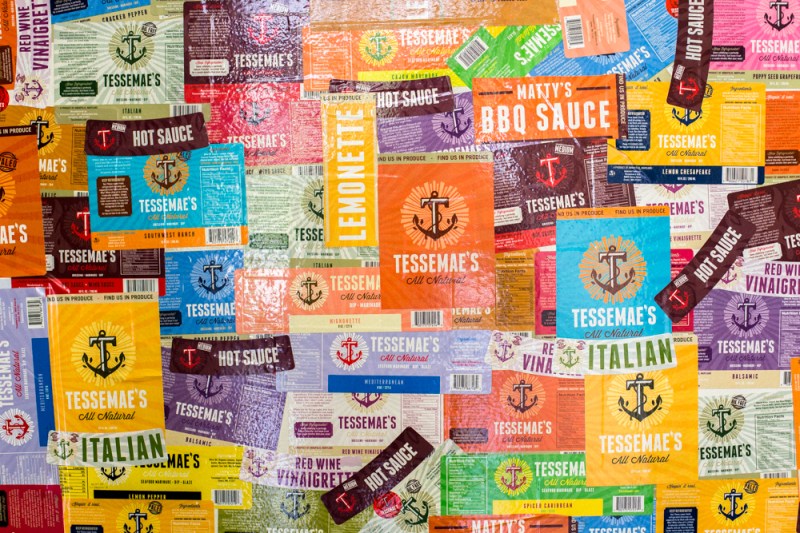
Enter Tessemae’s All Natural. Our family has been enjoying their salad dressings since 2011; their dressings were first sold in the Annapolis Whole Foods (one of our local markets), so we’ve been riding on the Tessemae’s bandwagon from nearly the start. In fact, last year I used their Lemonette dressing to help secure my win in a bacon competition.

It’s relatively easy, albeit unglamorous and time consuming, to develop your own salad dressings. But I’m a man of simple truths, and the simple truth is that Tessemae’s dressings are so tasty, and contain such high quality ingredients, that I haven’t felt a need to make my own. Essentially, this is the basic principle of supply and demand; thanks to their supply, we carry no demand. Honestly, as a consumer I’d much rather depend on the convenience and reliability of a quality product than figure my own out. There is honor in creating one product, and doing it well – very rarely today do we find true craftsmen and artisans. This is something that Tessemae’s does unequivocally with their dressings and sauces.

I had the pleasure of visiting their Baltimore-based headquarters (lovingly called “the Treefort”) twice over the past few weeks. Here is what I learned.

Read Full Article

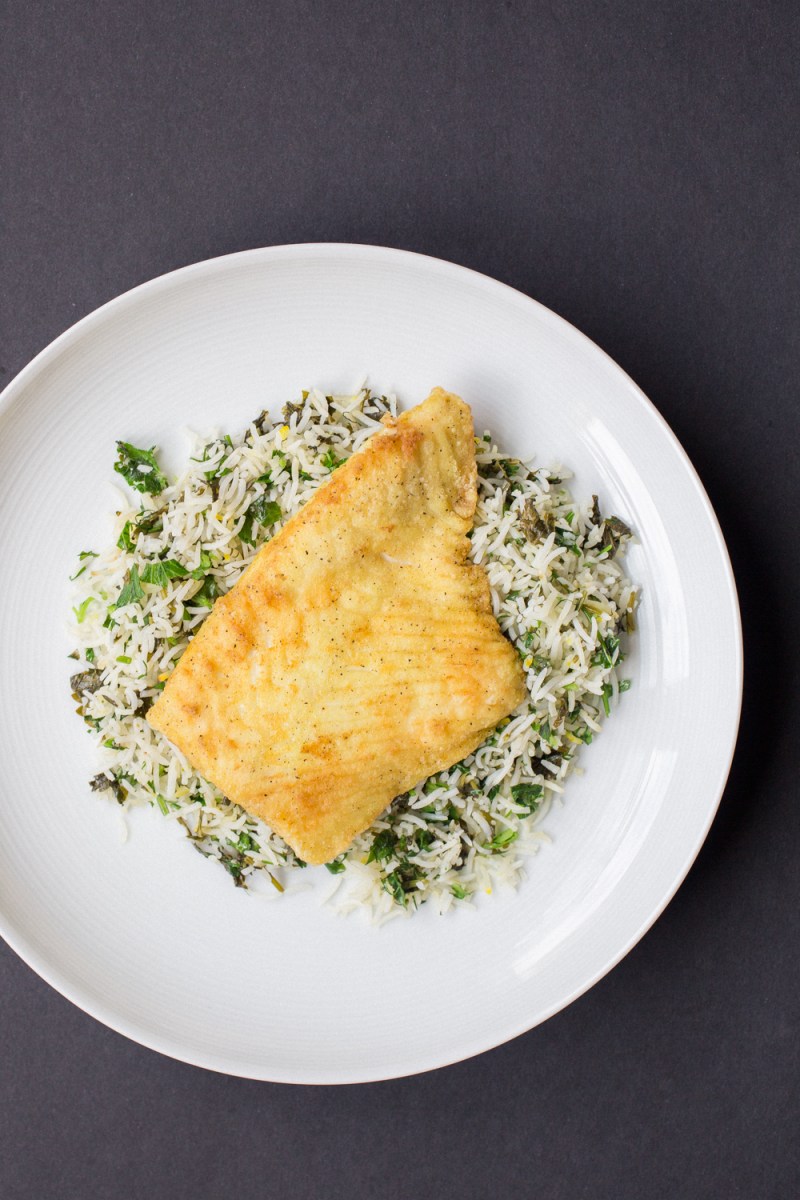
Sabzi Polo is a traditional Persian herbed rice pilaf. There are several different ways to cook rice in Persian cuisine, but Polo (parboiled and steamed) is the most popular. This dish in particular is eaten during the Persian New Year (Nowruz, late March) and served with white fish. The type of white fish varies from rare local fish like Caspian kutum to something more accessible, like halibut or tilapia.

Rice is a critical food source in modern day Iran, and has a long history in the region; it was first introduced from South Asia around 1000 BC, and has been grown in northern Iran ever since. It’s also commonly believed that rice entered Europe via Ancient Persia.

It’s exciting to see that white rice is gaining more acceptance in the Paleo community. I started adding white rice to my version of the Paleo diet in early 2011 (here is an old post about it) and it’s definitely had a positive impact on my overall wellness. I explain many of my reasons for eating rice in my book, but the long story short is that it’s an ancient, delicious, satisfying, and neutral starch (it has fewer toxins than many foods we consider Paleo, like coconut and almonds – reference) whose glycemic load is easily tempered by eating low-glycemic varieties (basmati rice in particular is lower (28) than regular white rice (43) – reference). When eaten as part of a whole meal with added fats and acids, its glycemic index is even further diminished (reference). There are still people that have digestive issues with rice, but for everyone else, it may warrant a place on your dinner table.

Sabzi Polo is an excellent example of an optimal way of eating rice, since it’s paired with a huge amount of herbs – much more than your typical dish – and considering Mathieu Lalonde’s AHS 2012 talk where he found that herbs and spices are second only to organ meats in terms of nutrient density, it’s always good to eat lots of herbs.

This recipe is part of a collaboration with my friend Naz of Cinnamon Eats – after having several discussions about Persian rice dishes, we decided to each write up a recipe to highlight the varied and delicious choices available in Persian cuisine. Be sure to check out her half of the collaboration: Zereshk Polo (Persian Barberry Rice).

Read Full Article

Jerusalem artichokes have an interesting history. There is no connection between this tuber and the city that bears the same name; they were originally cultivated by Native Americans. The most common theory behind their current name stems from the fact that Italian immigrants named them girasole, which later became “girasole artichoke”, which then eventually developed into “Jerusalem artichoke”. Its other name, sunchoke, is a relatively new name for the tuber that stems from the fact that its flowers look a lot like sunflowers.

While only distantly related to artichokes, Jerusalem artichokes still carry a distinct (okey dokey) artichokey flavor when cooked. They have a similar texture to potatoes. They’re one of my favorite starches because of their versatility; they can be eaten raw or cooked, they don’t need to be peeled, and they taste good both gently cooked and fully roasted.

Read Full Article