Food

This week I’m traveling to NYC for a cooking demo, and Providence and Boston for book signings. More info here – please be sure to come visit since I’m not sure when I’ll be heading north again for a while. See you there!

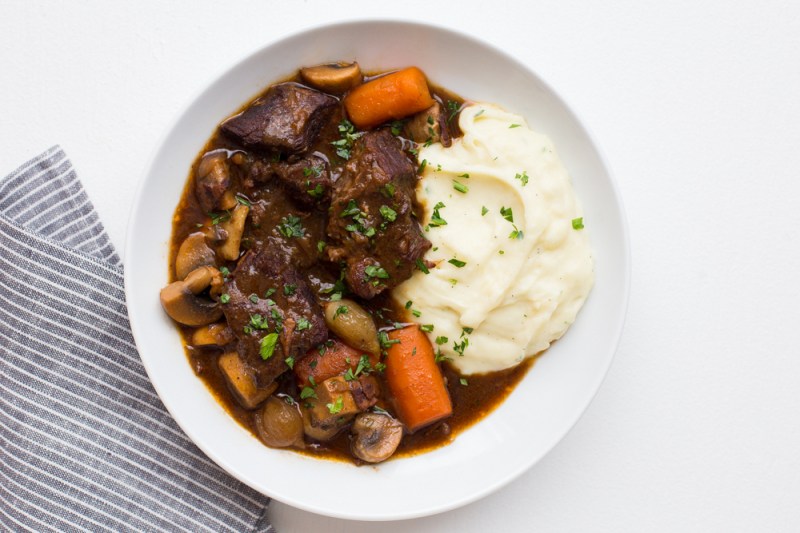
I have a love/hate relationship with braised beef. While I love the tenderness that comes from slow-roasting meat in liquid, I sometimes become bored with the tired texture of braised dishes. So in writing this recipe, I decided to make a classic braised short ribs recipe, but alter its final texture by roasting it at a high heat before returning it to the braising liquid. This technique allows me to add some crispness to the beef and also presents an opportunity to reduce and flavor the braising liquid while the beef finishes.

Short ribs are one of my favorite cuts of beef, as they are extremely rich, relatively inexpensive, and very versatile. They are best known as a low-and-slow cut, but they fare just as well with high heat grilling, such as in my Wang Kalbi recipe.

The short ribs for this recipe were graciously donated by my friends at Arrowhead Beef, a grass-fed farm located in Chipley, Florida. Along with their online store, they sell their products all over Florida, at farmer’s markets and retail locations. Their short ribs were delicious – meaty and full of tasty connective tissue. They worked perfectly with this braise.

Better yet! They’re offering a 10% off total purchase for The Domestic Man readers. Use code domesticman when checking out. Offer expires March 31st, 2014 and excludes Bulk Beef options; limited 1 per customer.

Read Full Article

Over the weekend I was invited to a one-on-one tour of my local Whole Foods Market in Annapolis, Maryland. Although we shop at this store often, it was enlightening to walk around the store with their resident Healthy Eating Specialist and discuss some of their programs and policies. While we had a few opposing food philosophies, the amount of overlap between their goals and my health principles was impressive and encouraging. So, let’s talk about what I discovered.

Read Full Article

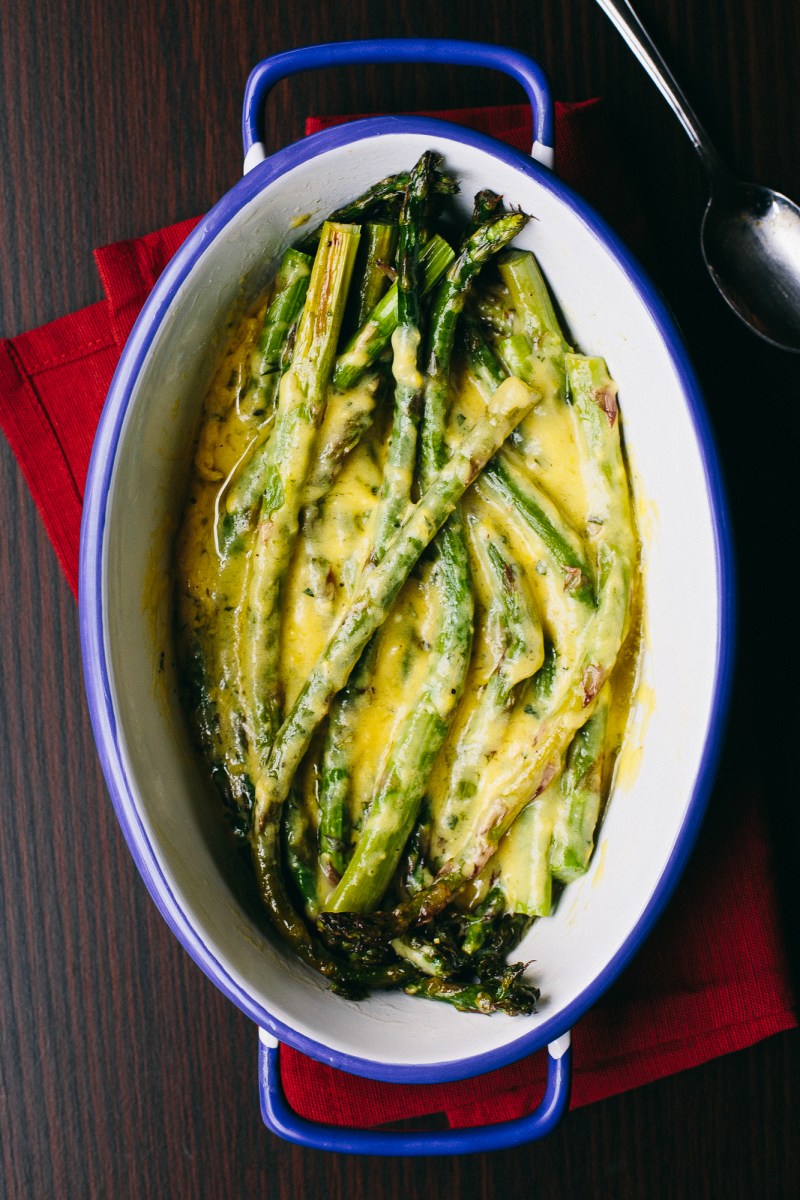
Roasted asparagus is no big deal, right? To roast asparagus, you basically just roast asparagus – not really worthy of a dedicated blog post. But pair this under-appreciated vegetable with a traditional Béarnaise sauce and you’ve got something spectacular. It’s funny what a few egg yolks and some butter can do.

Asparagus is an ancient vegetable, found in records dating back 5,000 years. In fact, an asparagus recipe appears in the oldest surviving cookbook (Apicuius, 4th century AD). While widely used by the Greeks and Romans, it nearly disappeared after the fall of the Roman Empire, only to be reintroduced in the late Middle Ages by the French.

Béarnaise sauce is relatively modern, first developed in the 19th century. It is often associated with Hollandaise sauce, as it employs a similar technique of emulsifying fat (butter) in egg yolks and acid. While Hollandaise is made with lemon juice, a Béarnaise is made with an herb-infused vinegar reduction. The sauce has nothing to do with bears, or the capital of Switzerland (Bern), but rather is named after Béarn, a former province in southwest France. Fun fact: d’Artagnan (one of the main characters in The Three Musketeers) was from Béarn.

My friends at Pacific Merchants donated this Enamour dish for my recipe, which was pretty cool of them. Enamel-coated stoneware is very sturdy and versatile, and this dish is a thing of beauty. It can be used for baking and broiling, but in this case I used it as a serving dish. They are also offering 25% off purchases on their site for my readers, valid March 4-12, 2014! Use code DomesticMan at checkout.

Read Full Article

Callaloo is a Caribbean dish that originated in Africa. It is typically made with amaranth leaves (aptly called callaloo in the West Indies), taro leaves (dasheen), or water spinach; since these plants are somewhat hard to find in the United States, spinach is a common replacement stateside. There are many variations of this dish, and my recipe follows the Trinidadian version, which includes coconut milk and okra. In the Caribbean, Callaloo is often served as a side dish, but when I make it, it almost always turns into a main course. I’m not the type of guy that craves vegetables often, or vegetable soups for that matter, and I crave this dish. A lot.

I think I could eat my weight in Callaloo. I don’t know what it is about this dish that makes me go crazy about it. For one thing, I feel like a superhero after I eat it – like I’ve consumed a week’s worth of vegetables in one sitting. It’s also ridiculously delicious, and carries a unique flavor despite using fairly common ingredients. The only ingredient in here we don’t eat regularly is okra, since my wife isn’t a fan of okra’s slimy texture; luckily, the texture is cleverly masked in this dish.

Read Full Article

A couple weeks ago I did a guest post on RobbWolf.com, which was pretty exciting for me. I first heard of the Paleo diet through his book, The Paleo Solution, and considering how profound of an impact it made on my health, it was just surreal to join forces with him.

For my guest post, I deconstructed the entire history of one of my favorite dishes – Beef Bourguignon – including the individual histories of every ingredient used in the dish and the people who made it. It took a fair bit of research to put it all together, and I think it’s a very interesting read, though a little longer than my typical blog posts. For posterity’s sake, I decided to move the article to this blog in case you wanted to check it out. Enjoy! The link to my recipe is at the bottom of the post.

Read Full Article

Since I personally have an autoimmune condition, I have a lot of respect for the Autoimmune Protocol. For those unfamiliar with the concept, the protocol is aligned with the Paleo Diet (you know the drill – meats, seafood, veggies, fruits) but also eliminates other troublesome foods in an effort to further reverse autoimmune issues. The main culprits are nightshades (peppers, potatoes, tomatoes), eggs (especially the whites), dairy, alcohol, and most nuts and seeds.

I’ve dabbled in the protocol over the past couple of years, eliminating certain foods for months at a time and then re-introducing them to see how I react to them. Most recently I eliminated eggs for about four months because I found myself feeling tired after eating them; I started eating eggs again this month without any issue. There are a ton of factors involved in diet and health, so I’m not saying outright that eliminating eggs for a short period of time directly affected my resiliency, but I think there is good reason to abstain from certain foods from time to time. After all, this mimics the seasonality of human diets preceding our modern era, as well as many religious practices that have endured over the years.

When I wrote The Ancestral Table I didn’t necessarily keep the Autoimmune Protocol (“AIP”) in mind, especially since two incredible-looking cookbooks on the subject are coming out this year (see: The Paleo Approach Cookbook and The Autoimmune Paleo Cookbook). After doing the math, 55 of the 112 recipes found in my cookbook are AIP-friendly or easily modified to be so. While at first I thought this number was pretty low, after talking with some experts I was happy to find that 55 is actually a fairly high number compared to many of the Paleo cookbooks out there, since many of them rely on nut-based flours for texture, something that is rarely found in The Ancestral Table.

So I thought it would be worth your time to publish an AIP guide for anyone looking to buy my book while on an elimination diet. For more information on the Autoimmune Protocol, check out my friend Sarah’s site, ThePaleoMom.com.
Read Full Article

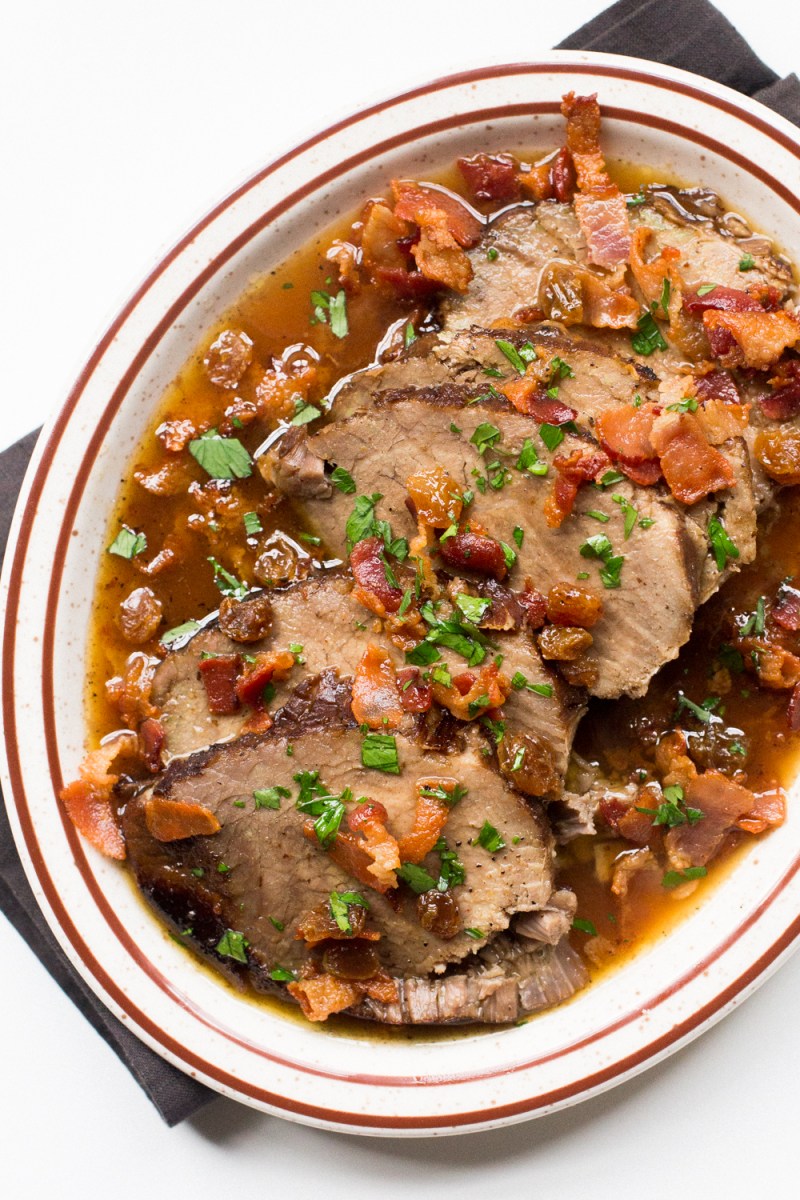
Sauerbraten (“Sour Roast”) is a German pickled roast. Traditionally made with lean horse meat, this dish works well with any lean roast. For my recipe in particular I used eye of round roast. This dish is unique in that the meat is tenderized in a wine or vinegar marinade for several days, probably a carryover from ancient preservation methods.

To counter the sour taste of the meat, Germans today commonly add gingersnap cookies to the roast’s gravy; personally, I used a bit of honey and golden raisins to cut its sourness, a custom found in Rheinischer Sauerbraten (Sauerbraten from the Rhine region in West Germany).

The eye of round roast for this recipe was graciously donated by Friends & Farms, a Maryland-based community that provides high-quality food baskets from local farms and artisans. They build the baskets with certain recipes in mind, and provide the recipes each week; each basket is designed to complement your eating habits, and is enough food for about three meals per week. You can also customize your baskets for a more Paleo-minded lifestyle, which is really cool.

Better yet, they are giving away a free weekly food basket to one of my readers – if you’re in the greater Baltimore area, click here to enter the giveaway via Rafflecopter. The giveaway ends ends midnight (EST) Saturday, Feb 22nd, 2014 and is limited to Maryland-area residents; you’ll need to be able to pick up your winnings at one of their many pickup locations. Good luck!

Read Full Article

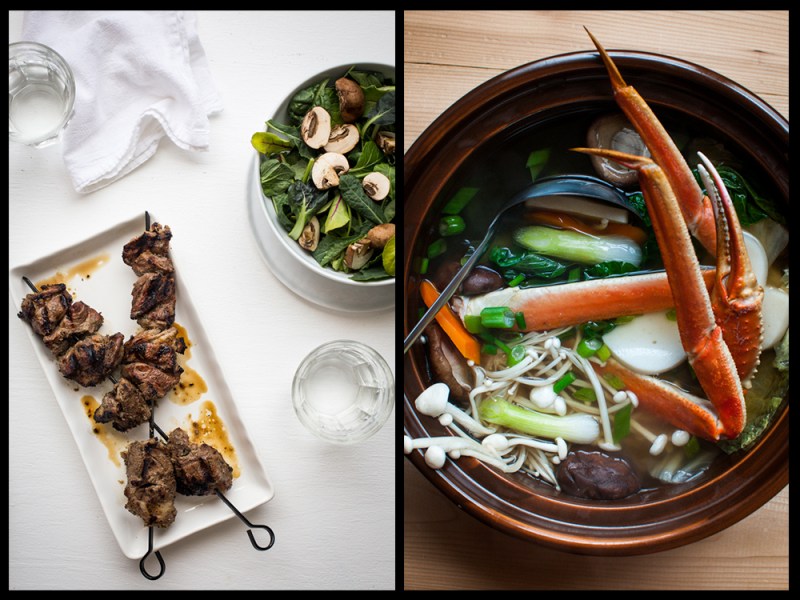
Today is kind of a big deal for our family. After nearly two years of work, The Ancestral Table is finally in stores today! To celebrate, I thought it would be fitting to post my cookbook recipe for Japchae, which is a common party dish in Korea today.

Japchae has its origins in the 17th century; fittingly, it was first served at a party for the reigning king. Originally made with just vegetables and mushrooms, sweet potato noodles (dangmyeon, also called glass noodles) were introduced in the 20th century and are now an integral part of the dish.

Read Full Article

Bouillabaisse is a traditional Provençal (Southeast France) stew, typically made with fish and shellfish. Although it was originally made with rockfish, today it’s also made with all sorts of different seafood. For this recipe in particular, I decided to go with lobster and mussels; I like the idea of pairing two foods that are at opposite ends of the price spectrum (lobster = rare & elegant, mussels = common & unglamorous). This dish is paired with my lobster stock recipe, so be sure to check that out since you’ll need some stock. Putting this dish together – stock and all – is actually a fairly quick experience: in about 90 minutes you’ll have a recipe that will have your dinner guests swooning.

Don’t let the assumed costs of buying lobster deter you. If available in your area, live lobsters are surprising affordable when compared to the going rate at a seafood restaurant. And really, sometimes you can’t put a price tag on eating a rich, classic meal in the comfort of your own home.

Also, don’t forget that I’m hosting a giveaway this week; click here for a chance to win two live 1.5 lb lobsters from lobster.com ($65 value)! The giveaway is limited to continental US residents and ends midnight, Saturday, Feb 8th, 2014. Good luck!

Read Full Article

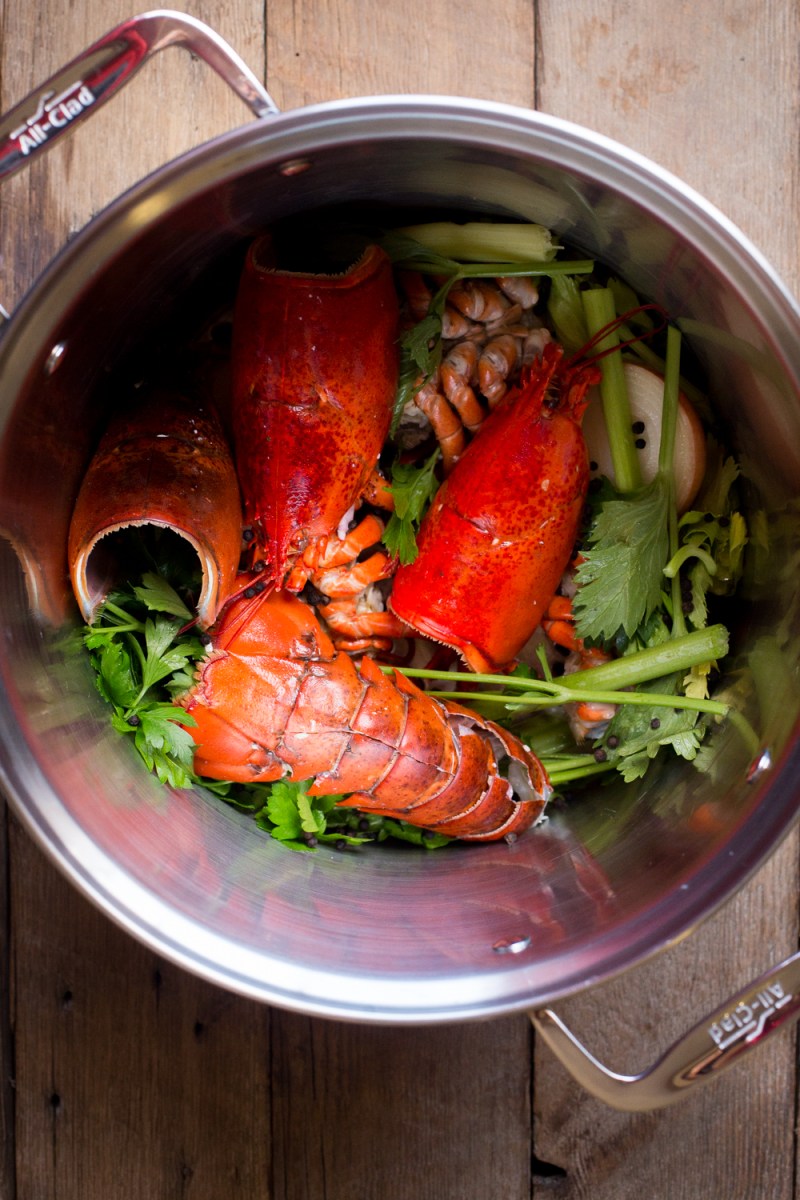
Phew! January has come and gone, which means that my tradition of sharing only Whole30 recipes during the month is over. While I think that Whole30 recipes are easy to make and fun to work with, I miss cooking with alcohol the most each January. So let’s dive right into February with an easy, tasty recipe that can be used in many different ways – lobster stock. Most people associate stock with long, boring hours of slow-cooking. The opposite is true with lobster (and all shellfish) stock, as it’s just a matter of sautéing vegetables and the shells, then adding water and wine, and cooking until it’s super delicious (about 45 minutes).

The folks at Lobster.com were kind enough to donate a lobster for my stock recipe. They ship overnight to the continental US, and it was quite an experience to receive a package in the mail that contains a live, breathing animal; not only was it alive, but it was the most lively lobster I’ve ever worked with! I par-boiled the lobster (instructions in the recipe below) so that I could use its shell for stock, and its meat for a Lobster and Mussel Bouillabaisse. I bought a couple lobster shells from my local grocer to add to this recipe and I was amazed at how thick and hearty the Lobster.com shell was compared to what I usually buy!

I was also able to arrange a giveaway through Lobster.com: two 1.5 lb live lobsters, delivered to your door ($65 value)! To enter, click here to enter via Rafflecopter. The giveaway is limited to continental US residents and ends midnight, Saturday, Feb 8th, 2014. Good luck! Okay, let’s move on to the recipe.

Read Full Article