dinner

Baltimore/DC friends: Come join me for a cooking demo and holiday social this Sunday! $10 entry to cover grocery costs, space limited to 30 guests. Click here for more info. See you there!

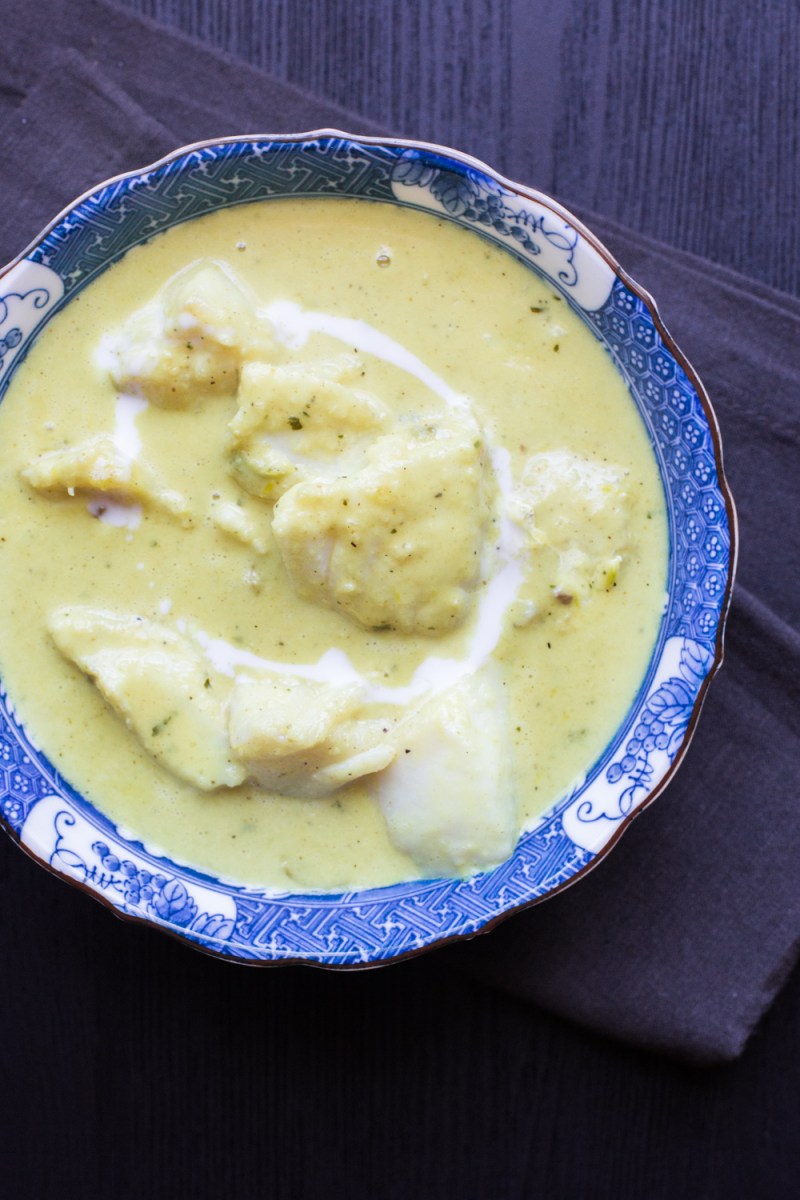
Mas Riha is a fish curry from Maldives, the small group of islands to the Southwest of the Indian subcontinent (it’s officially the smallest country in Asia). The dish is very representative of Maldivian cuisine, which is based on three main staples: fish, coconut, and starch.

While many people associate curries with hot, humid weather, I prefer them in the cold of winter; to me, the contrast of bitter cold weather and tropical food tends to embolden the curry’s flavors. This week is our first real glimpse of winter on the East Coast (there’s snow on the ground as I type this), so it seems like the perfect time to share this recipe. Fish curry is just about perfect, since it needs so little time to cook; you can easily throw together this entire delicious meal in less than 30 minutes.

Read Full Article

Jaegerschnitzel (Jägerschnitzel) is a traditional German dish, most commonly made with pork or veal cutlets (schnitzels) today. Historically, they were made with wild boar or venison (jäger means “hunter” in German) and paired with wild mushrooms. Today, its accompanying mushroom gravy is what separates Jaegerschnitzel from its more commonly-known (and gravy-less) counterpart, Wiener Schnitzel. Fun fact: it’s believed that Chicken Fried Steak originated from this dish, when German and Austrian immigrants brought it to Texas during the 1800s.

Making this dish within a Paleo template is easy, as it only requires a different type of flour. A combination of potato starch and arrowroot flour works best, but if you have only one flour on hand it still turns out pretty well. Tapioca starch can also be used in a pinch.

Read Full Article

A few years ago I spent a winter in Bavaria, the Southeastern state in Germany. One of my favorite dishes there was Blaukraut, a simple simmered red cabbage. The dish has three different names in Germany – Blaukraut (“blue cabbage”) in the South, Rotkraut (“red cabbage”) in Central Germany, and Rotkohl (also “red cabbage” – kohl is a Northern word for kraut).

It’s believed that the different names stemmed from the fact that the cabbage can take on different colors depending on the acidity of the soil it was grown in and its method of preparation. Some contend that the variation comes from the fact that there wasn’t a German word for the color purple until after the cabbage had been introduced. Since red cabbage has a tendency to turn a blueish color when cooked, adding acid (in this case, apple cider vinegar) helps retain its redness.

Read Full Article

Boniato (also called batata or tropical sweet potato) is a white, starchy, and dry version of the common sweet potato. It’s popular in Florida and the Caribbean, but well-known throughout the Americas and some of Europe (Spain in particular). It was cultivated as far back as 1,000 years ago in Central and South America. Its skin is red-to-purple in color, and has white flesh. As far as I can tell, it is nearly identical to the Japanese sweet potato in terms of appearance and taste; considering the fact that sweet potatoes were a late addition to Japan (around the 17th century), I’d guess that the differences between the two is minimal. I’ve also seen identical sweet potatoes labeled as Korean sweet potatoes here in Maryland.

Taste-wise, boniato is like a cross between a white potato and sweet potato. If you’re missing the consistency of white potatoes but react poorly to them, this is the dish for you.

Preparing boniato is easy. Because the potato is naturally creamy, you only need to add a little cream to them to get a truly decadent flavor. If you’re dairy-free, they’re still surprisingly creamy when made with only chicken broth.

Read Full Article

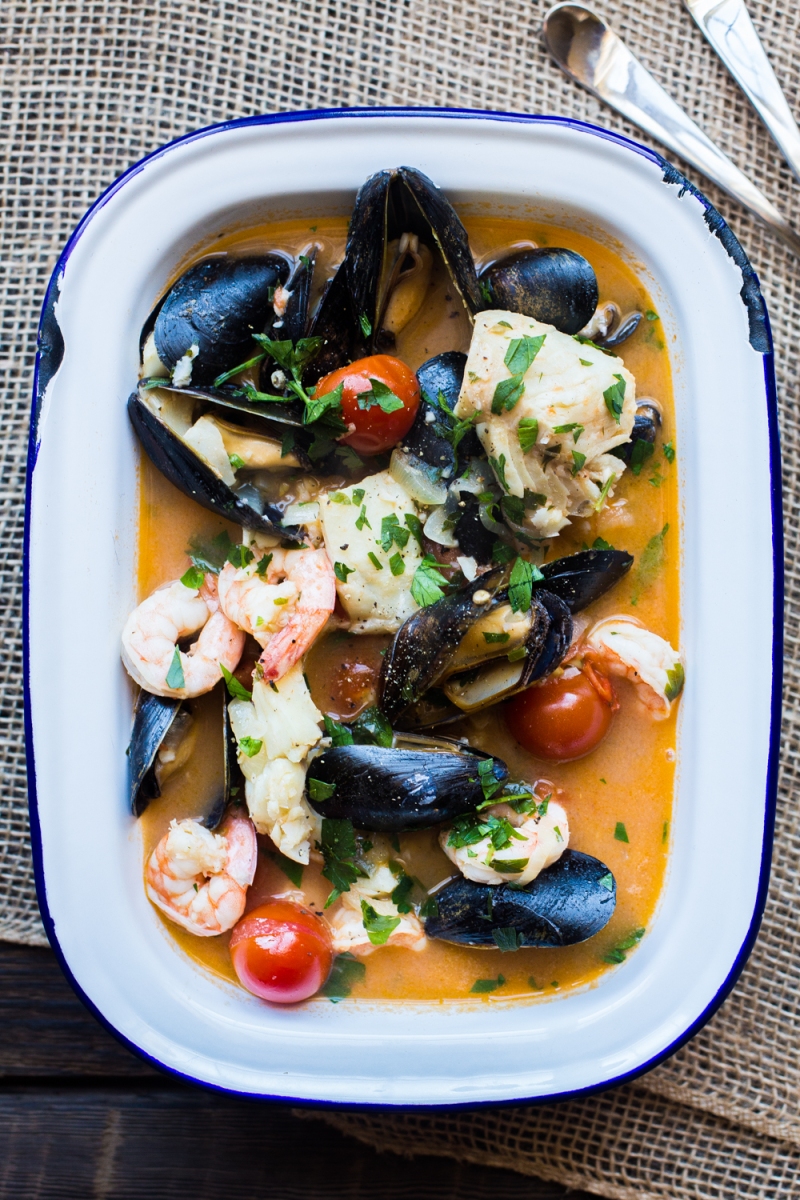
Brudet is a fish stew from Croatia, similar to an Italian Brodetto or Greek Bourdeto. All three are based on the Venetian word brodeto (“broth”). The recipes for each dish are similar; in fact, if you ever find yourself traveling along the Adriatic coast and see a similarly-named dish on a restaurant menu, you can probably bet it’s going to be a delicious fish stew cooked in a tomato base.

While there is a lot of variation to this dish, I like the Croatian version because it is an easy and unassuming approach to making soup. Marinate some fish for a while, then throw everything together at the proper time; it’s a true one-pot dish. Traditionally this dish is made with a mixture of fishes, to include eel, rockling, or coral trout; since they’re hard to come by, I think any firm white fish should be okay. I used cod. Adding shrimp and mussels also gives the stew a more rich and satisfying flavor.

Read Full Article

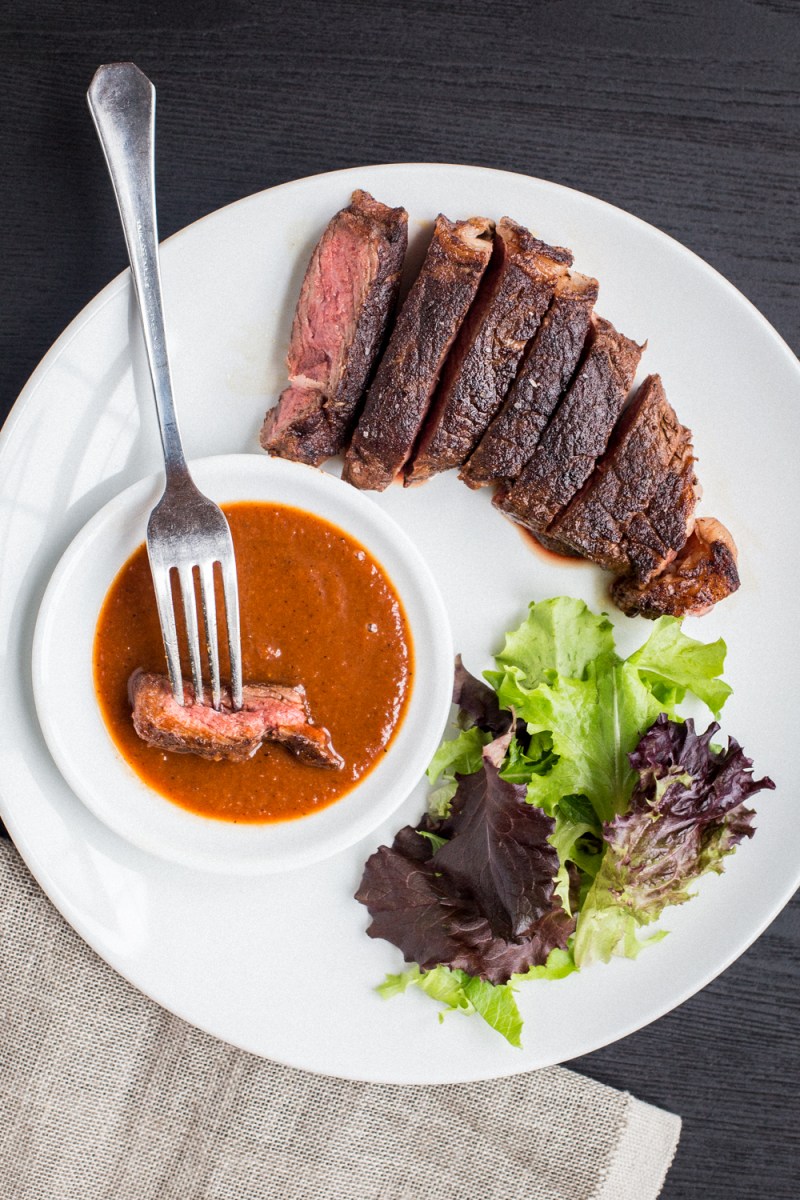
As the temperatures fall this month, I expect many people to be hesitant about going outside to grill food. Personally, we keep the grill outside and ready all year long, but I realize that not everyone feels that way (especially my Midwestern readers, whose winters are a little more significant than ours). So I thought it would be a good time to work on a solid, foolproof pan-seared steak recipe.

To be honest, we as a family don’t eat steak much, due to its high price point. But it’s an excellent celebratory meal, or for when you’re looking for a simple, developed taste without having to spend much time preparing your meal. Generally, steaks are made from the most tender cuts of the animal and cooked quickly; their tenderness comes from a lack of tough fibers and connective tissue found in the muscles that are more worked. Applying a light spice rub on a steak is ideal, and right before cooking, so that you have contrasting tastes of the crust and delicate interior. The combination of cacao, peppers, and salt go especially well with steak.

Read Full Article

Carne de Porco à Alentejana is a traditional recipe from Portugal, made from a combination of pork, wine, paprika, clams, and black olives, and typically served with roasted or fried potatoes. When a reader first suggested I tackle this dish, I was floored by the seemingly odd ingredients list; but much like Chicken Marbella, the offbeat ingredients mixed together perfectly to create a unique taste that’s more than the sum of its parts.

While the name might lead you to believe that this dish originated in the Alentejo region of Portugal, it’s actually from Algarve (the Southernmost point of the country). Legend has it that chefs in Algarve gave the dish this name to let diners know that the pork was from Alentejo-raised pigs, who were fed acorns and had a flavorful meat. At the time, pigs in Algarve were fed fish scraps from the burgeoning canning industry, and was not considered very tasty. Some argue that the addition of clams to the dish was a way of masking any “fishy” tasting pork.

Read Full Article

I know what you’re thinking. “But Russ, it just turned October, and you’re already posting about Thanksgiving turkey!” While that’s true, there’s a simple explanation: if you want to celebrate Thanksgiving this year with a wholesome, happy, and pastured turkey, you’re going to need to contact a local farmer and pre-order it soon. As in, right away. So this recipe serves as both a reminder to pre-order a turkey soon, and a guide on what to do with the bird when you get it. I’ve been smoking chickens and turkeys for a while, but I’ve been lousy at sharing my results. So this is my definitive guide on how to get a great smoked turkey, using either a gas or charcoal grill. I love smoking turkeys because the flavor is awesome, but also because it frees up valuable oven space on what tends to be a hectic day.

The common turkey we eat today is a domesticated descendant of the wild turkeys originally found in North America. When Europeans first saw turkeys, they incorrectly thought they were a form of guineafowl, which was sometimes called “turkey fowl” because back in the day they were imported into Europe through Turkey. The name “turkey” stuck with this bird afterwards. Interestingly, many European countries (including France, Italy, Ukraine, Poland, and Russia) call the bird a derivative of “India” or “Indies” because of a similar confusion with guineafowl (which was also imported from India), or possibly because the New World was often thought to be part of Asia during the European Renaissance.

Read Full Article

Hey folks! Tonight at 7pm ET (4pm PT) I’ll be one of three home chefs participating in a live Google+ Hangout “Cookalong” with MasterChef Top 4 contestant Jessie Lysiak; be sure to tune in via the MasterChef Google+ page or FOX’s YouTube Channel to watch me in action! Thanks for the support!

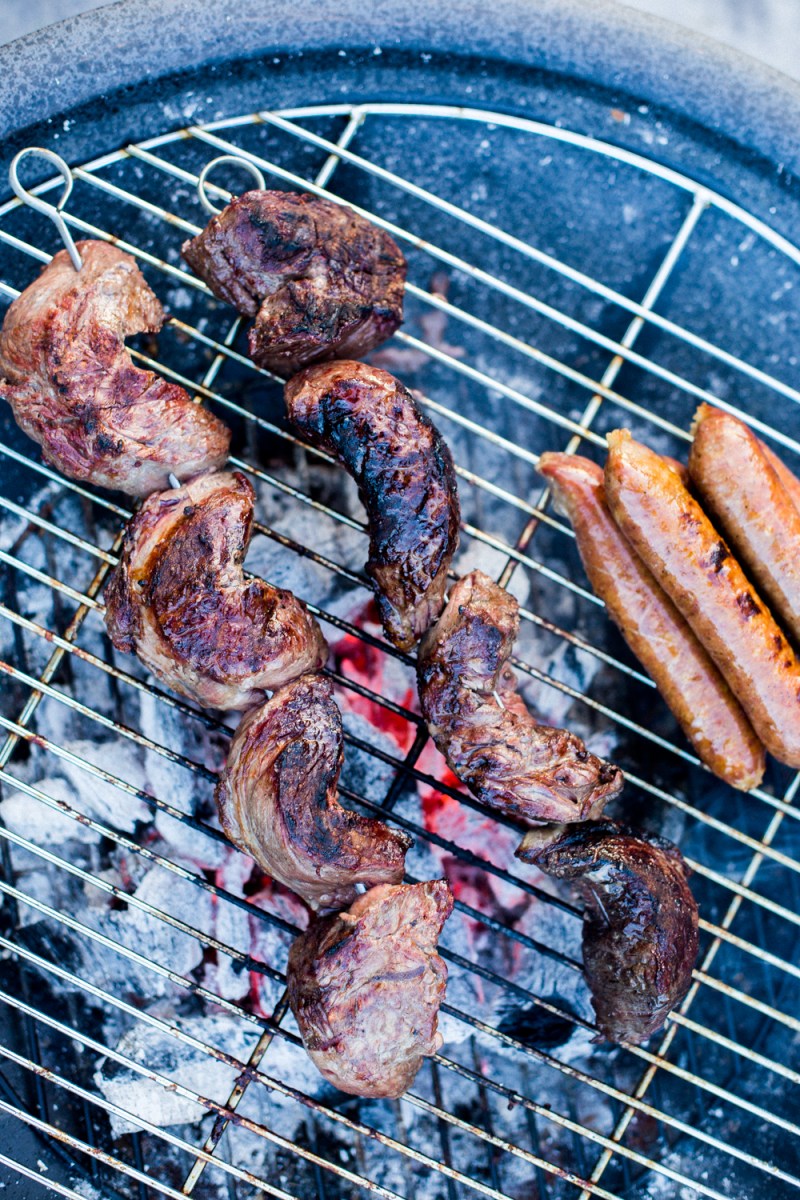
Most of the time, I really appreciate a well-marinated chunk of meat. Or something that’s been swimming in a fragrant sauce for a while. But every once in I while I like to bring dishes back to their basics – and this week’s recipe fits the bill nicely. Picanha (pronounced “Pee-cone-ya”) is about as simple as it can get: skewered rump cap roasted over an open fire, flavored with only sea salt. It’s a staple dish of Brazilian barbecue (churrasco) and one of the more prominent dishes from the region.

A rump cap is hard to find in many American butcher shops, as it’s often incorporated into the cut we call rump roast. If you’re lucky enough to find it in North America, the rump cap is usually identified by a thick layer of fat on one side which flavors the meat as it grills. As an alternative, we used a couple top sirloins from US Wellness Meats, which had a nice layer of fat on one side, mimicking the rump cap perfectly.

This week’s recipe, like last week’s Couve a Mineira, is part of a team-up recipe with my friend Alex Boake. Be sure to check out her illustrated version of this recipe!

Read Full Article

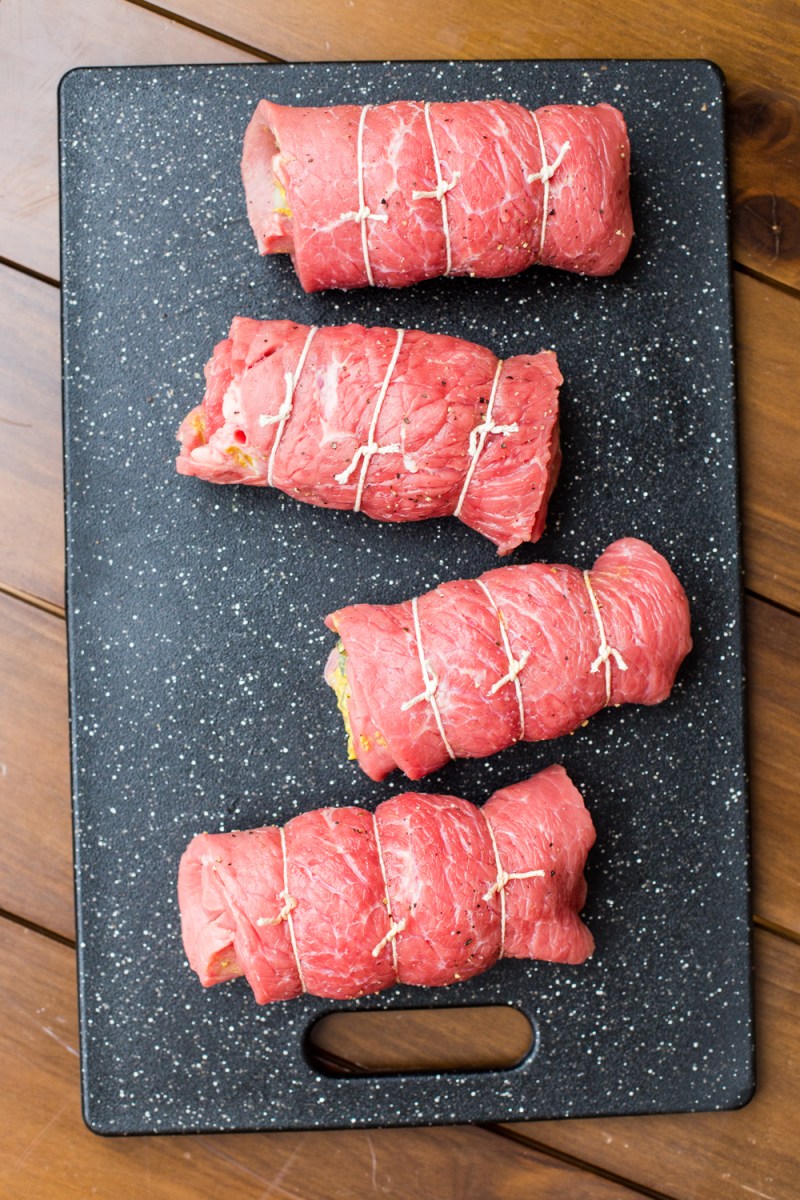
Rouladen is the German version of the French roulade, which is a roll made with thinly-sliced meat. The German version is interesting in that it probably came from Germans using items they had on hand most of the time – mustard, pickles, onion, and pork – to make something that’s unique in its own right. What’s even better is that these characteristics also make it easy to throw together this delicious meal with items you probably already have in your kitchen.

There’s no denying the French influence on this dish, with its use of a wine and broth braise (although Germans sometimes use beer instead) and mirepoix vegetables to add flavor. It’s commonly thought that Rouladen was originally made with strips of pork, although beef has become the most popular meat for this dish over the past century.

Read Full Article