gluten free

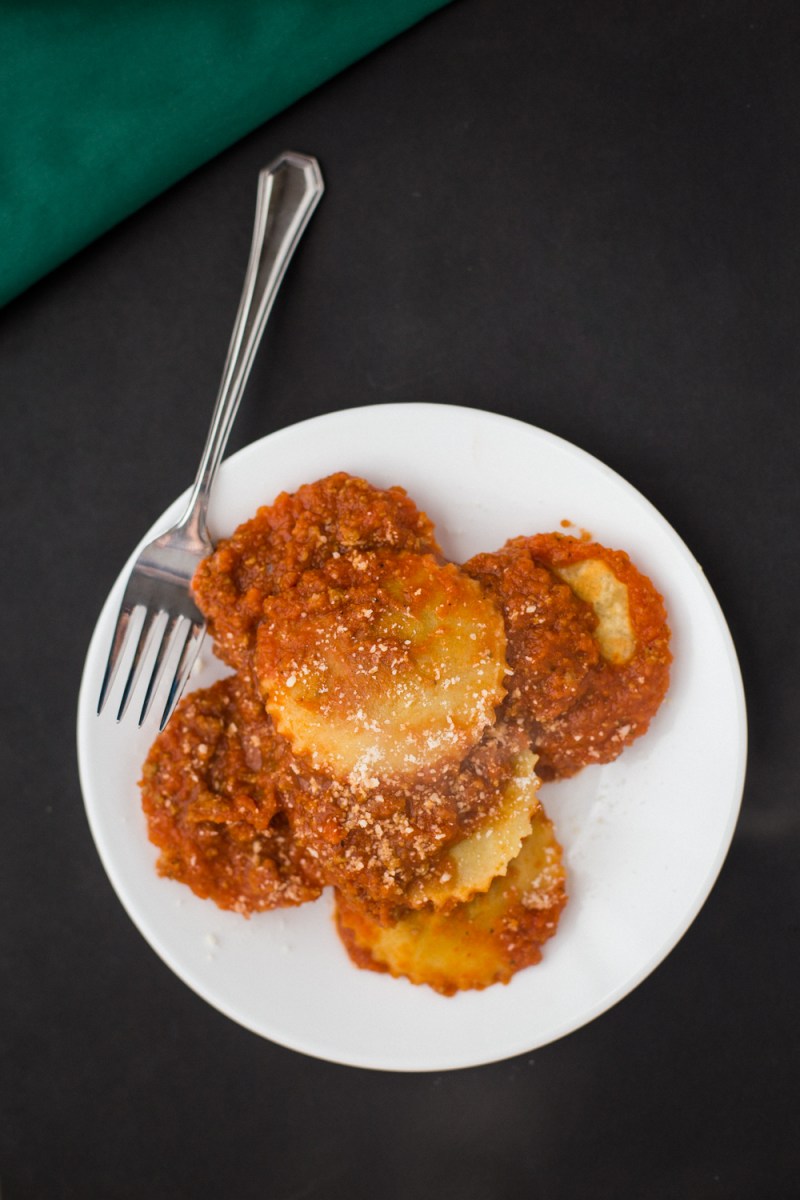
When removing gluten from my diet a couple years ago, one dish I assumed I would never taste again was ravioli. Seriously, how could I pull that one off without flour? I’m sure it could be done, but it would take weeks, even months, of trial and error. I love ravioli, but frankly, not enough to put myself through that kind of ordeal. Luckily, a moment of genius struck me when trying to figure out something unique to make with my most recent batch of Cappello’s Gluten/Grain Free lasagna sheets. They did all the hard work for me; I just had to put everything together.

Ravioli has been written about since the 1300s, so logic dictates that it’s been around longer than that. It probably took a while to get the attention of the scribes, right? There are countless variations of ravioli, but since this was my first time making it in years, I wanted to style it after my childhood favorite – Chef Boyardee beef ravioli!

Read Full Article

Earlier this week I wrote a guest post for my friends Matt and Stacy (aka Paleo Parents), here is the post for those of you that missed it:

Meet Oliver. He turned four years old last month, and has been eating the Perfect Health Diet version of Paleo (includes white rice and some dairy) since he before he was two. He loves Star Wars, Legos, and anything Disney. He has his ups and downs, but for the most part he’s a pretty adventurous eater, and I thought it would be fun to share what we’ve done to encourage healthy eating behaviors.

Read Full Article

A few weeks back I did a guest recipe for Nom Nom Paleo, and I thought I’d share it here on my site for posterity’s sake.

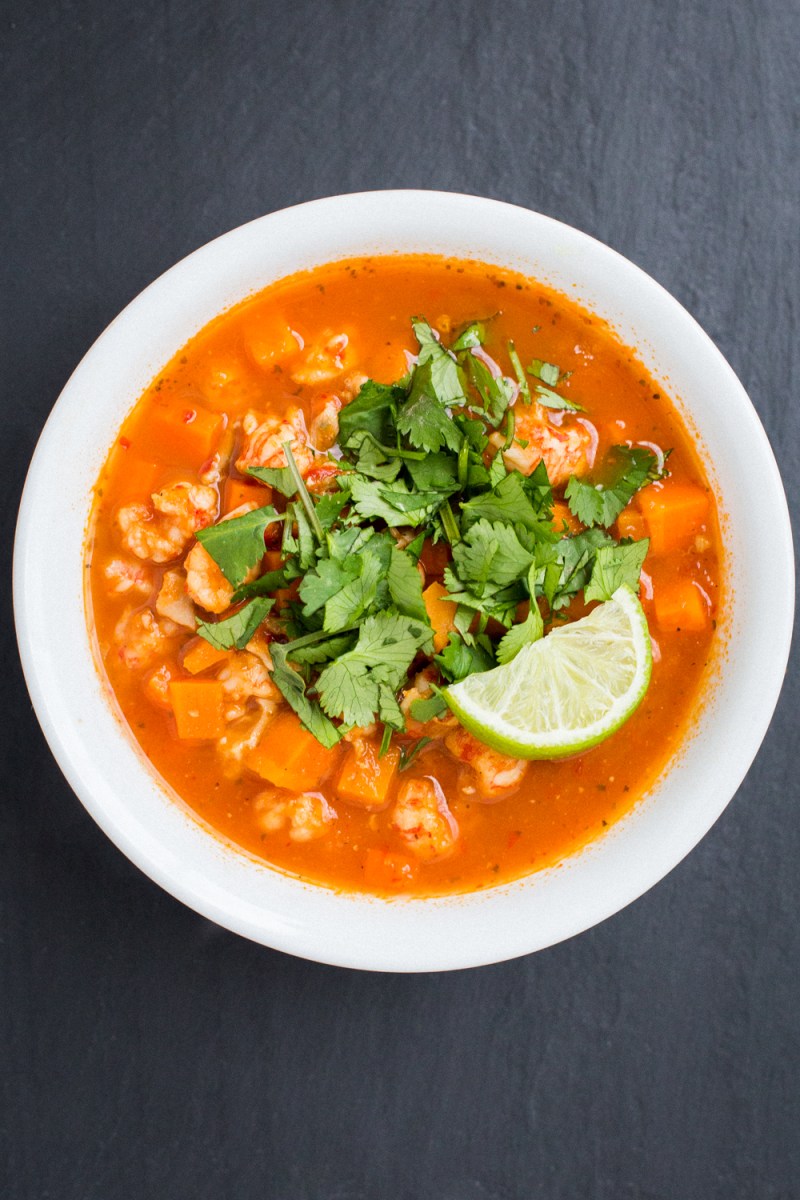
Langostinos (Pleuroncodes Monodon, also called “squat lobsters”) are small, lobster-like crustaceans most often fished off the coast of Chile. They are found in abundance worldwide, but sadly, they are rarely caught for human consumption; instead, they’re used as feed in fisheries, mostly because they carry a certain pigment that helps color farm-raised salmon and trout. They have a sweet, shrimpy tasty to them and can be found for relatively cheap – so if you can get your hands on them, definitely give them a try.

This recipe in particular is modeled after a traditional Mexican soup, Caldo de Camarón, which is typically used with shrimp. If you don’t have any langostinos on hand, shrimp can be used with this recipe.

Read Full Article

Like most of the Paleo world, I caught wind of Joshua at Slim Palate a few months back when he revealed that not only is he a teenager, but he lost over 100 lbs during his journey to find health and fitness. Incredible story aside, I immediately respected his photography and sense of style (I can’t imagine what my sense of “style” was at age 17!); he’s got an elegant eye that shows up in his pictures.

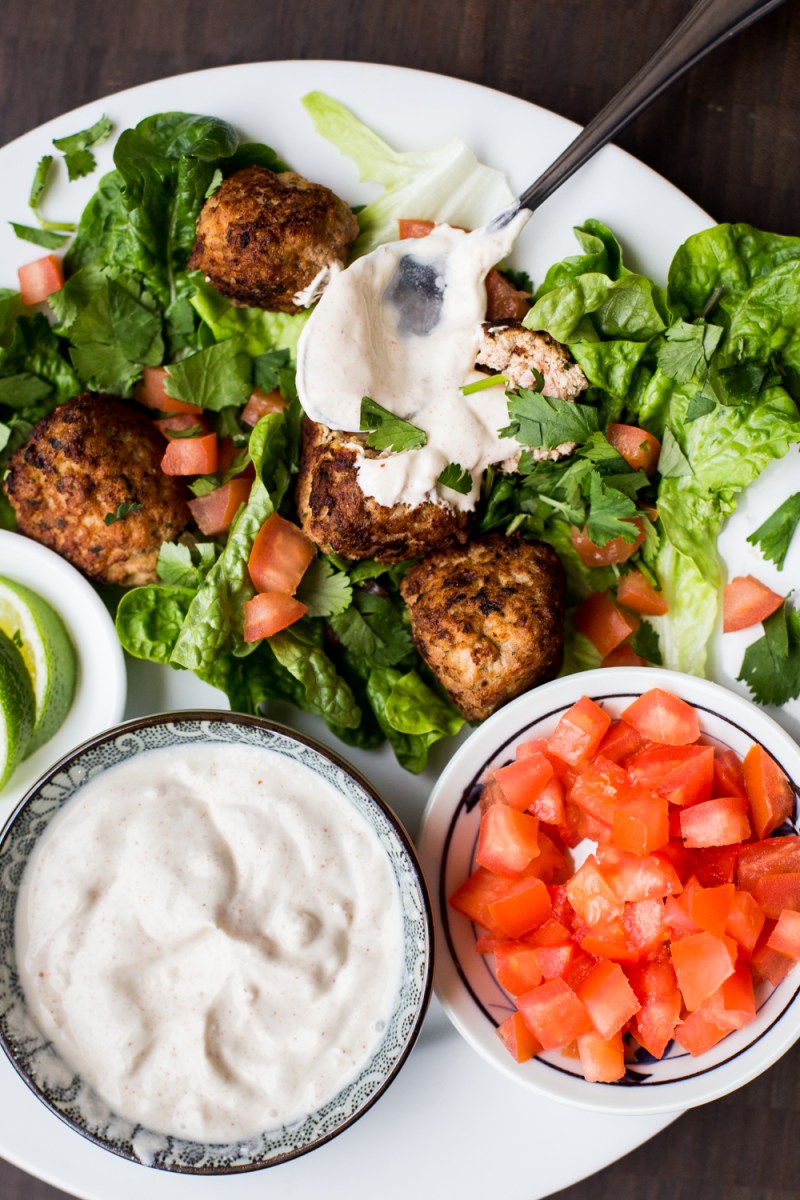
After a bit of chatting, I offered to do a recipe swap, where we recreate one of each other’s recipes, with allowance for tweaks. I chose to do one of his earlier recipes, Chipotle Dijon Turkey Meatballs, while he made a stunning rendition of my Rogan Josh recipe. My take on his original recipe is pretty faithful, but I added a creamy sauce on the side, modeled after the cream sauce typically found in traditional-style fish tacos.

Read Full Article

We eat watermelon a few times a year, and usually throw the rinds into the compost pile. I figure that’s what most people do. But a while back I ran across the idea of pickling the rinds, and I was immediately hooked on the concept; I love the idea of using a quick, simple pickling process to render something that’s usually inedible into a delicious, tangy, and crunchy treat.

It might sound a little weird at first glance, but watermelon pickles have been around for a while. While in Germany and Eastern Europe they tend to pickle the red flesh of watermelon, there are a few Scandinavian recipes that focus on pickling the rinds. In the US, there are records of people making pickles of watermelon rinds dating back to the Civil War; those original recipes call for soaking the rinds in a salt brine, then boiling with sugar, vinegar, cloves, and cinnamon until clear and soft, which turns it into something resembling a sweet relish. I went with a Scandinavian approach, but left a little of the flesh on the rind in order to add a little natural sweetness to the pickle and to aid in the fermentation process (bacteria likes sugar!).

Read Full Article

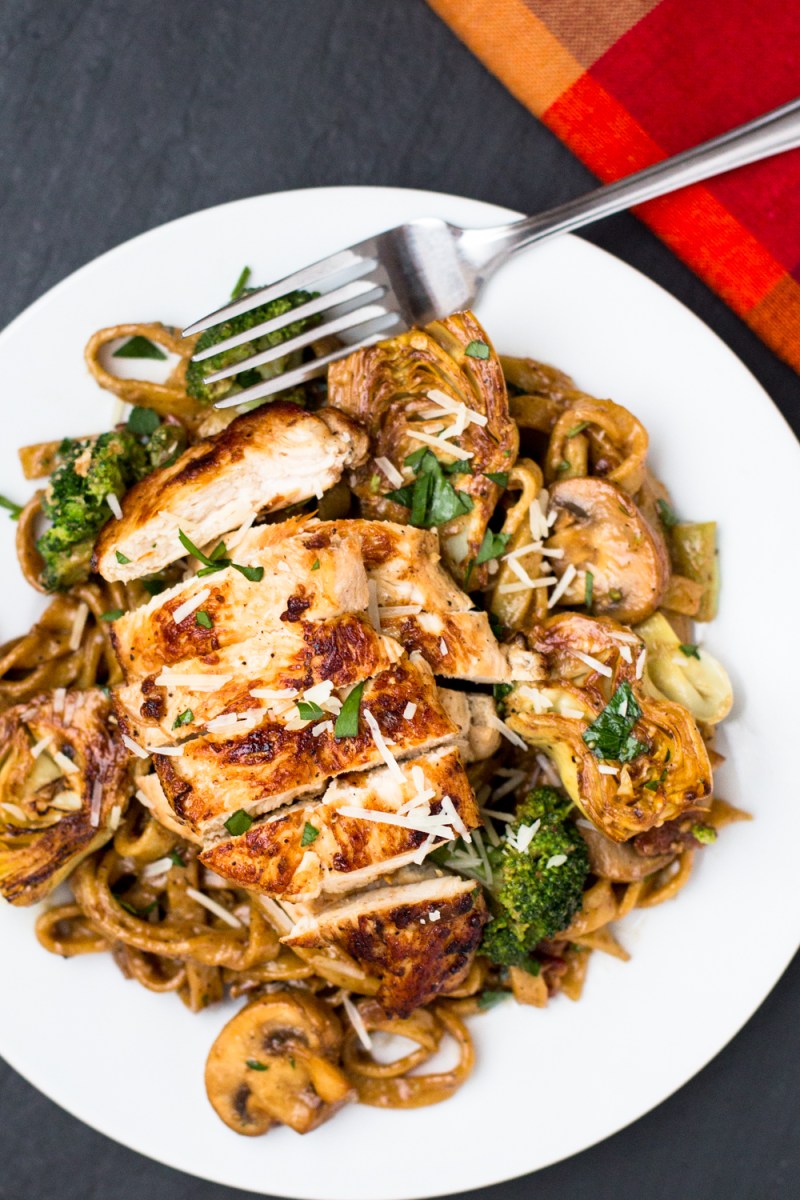
While researching some Italian pasta-based chicken dishes, I came across a dish called Chicken Francesca more than once. I loved the name, and all it implies: the Italian word Francesca literally means “from France”, so to me the name Chicken Francesca means it’s an Italian dish that is cooked using French culinary methods. The problem is that the recipes I found that carried the name were vastly different from my initial impression: some were baked using breadcrumbs and cream, others were mushroom-intensive and served over rice, and still more were linked to a restaurant in Boston known for breasts sautéed in a skillet with artichokes and parsley.

So I decided to take my favorite elements of some of those recipes to make something even more unique: an Italian pasta dish that borrows heavily from French culinary methods! Namely, I focused on creating a heavily-browned skillet in order to deglaze it to serve as the base for my pasta sauce. I also used a milder shallot instead of the traditional onion found in many Italian pasta dishes, and added fresh parsley right at the end of the dish, which is so often found in French cuisine.

Read Full Article

The word cutlet is a bit of a culinary mystery – everyone has their own interpretation of what it means. Throughout most of Europe, a cutlet is a thinly-sliced cut of meat (usually pork or veal) that is beaten, covered in breadcrumbs, and fried (think schnitzel). This is the same in the US, but they are mostly made with chicken breasts. The Japanese like to use pork (tonkatsu). Australia uses either chicken or lamb. Great Britain is a little different in that cutlets are usually not breaded.

And then there’s Russia. Somehow, as they trotted down the path of history, the Russians decided that котлет was a pretty good word for what we in the US would call a hamburger steak. Russian cutlets are a very common household dish, probably due to how easy they are to prepare. What’s funny is that they often eat cutlets between two slices of bread as a snack – which sounds a lot like a hamburger to me, although they are still called cutlets.

So at the end of the day, you could have three people walking down the street,

a) eating a Chick-Fil-A sandwich
b) eating a schnitzel sandwich (they exist!)
c) eating what basically looks like a hamburger

…and they’d all tell you they are eating cutlets.

So, after working on my Russian cutlets for a while, I decided to make a dish that is unique in that it would be fit to serve at a restaurant (which is ironic, because cutlets are rarely served in restaurants in Russia).

Read Full Article

A couple weeks ago our family spent a week in Orlando, visiting Disney World. It was great to get away from the freezing Maryland winter and spend some time in the Florida sun, enjoying one of our favorite places. We also got a chance to hang out with our friend Tony from Fitness in an Evolutionary Direction.

Being that this was our second trip to the resort in the past year, I made a conscious effort to track how we ate so that families heading down to the park can see how we managed. Overall, it’s a great place to visit if you’re concerned about diet, although you’ll have to actively avoid sugar, since it’s just about everywhere there! Alright, let’s get down to business.

Read Full Article

A while back I stumbled upon this recipe from Tina at Oh Snap! Let’s Eat! and knew that I had to try it for myself. Pancakes made with just eggs and a banana? Too good to be true. Turns out they’re very tasty and an interesting way to enjoy some of my favorite breakfast staples.

Read Full Article

Update: congratulations to Chris, Ethan, and Jamison, the three winners! The giveaway is now officially closed.

It’s probably no surprise that I’m a huge fan of Nom Nom Paleo. Michelle’s photos are always perfect and vibrant, and her recipes make it immediately apparent that not only does she know her way around a kitchen, she has a serious love of all things food. She’s a continuing source of inspiration for me in terms of presentation and healthful approaches to cooking. You might think it’s funny, but I only allow myself to visit her website every so often, mostly to make sure that my next recipe isn’t going to conflict with one of her recipes. And this is because I have serious blog envy; I’m afraid that if I go there too often, my cooking and website will mimic hers even more than it does already! I know, it’s ridiculous.

Her much-lauded iPad app received a serious update earlier this month, with a new pricing scheme – instead of in-app purchases for new recipes, you get the whole shebang for a one-time $6 price tag. I have put the app through its paces and I can say with conviction that it’s one of the best-designed apps I’ve seen, period. It has over 120 recipes, all of them both beautiful and delicious. I especially love her Walnut Prawns recipe, which made me realize that my own recipe for the dish is in serious need of updating!

To celebrate her new iPad app update, I’ve teamed up with Michelle to offer three download codes!

Here’s how to enter the giveaway (first one is required, second is optional):

1. Sign up for my newsletter (on the right sidebar of this page) and leave a comment on this post letting me know you did it.
2. “Like” The Domestic Man FB page and leave a comment on this post letting me know you did it.

If you do both options, I’ll give you two entries into the giveaway! You can tell me which options you did in one comment to save time. The giveaway ends at 10pm TONIGHT (January 27th, EST), and I will select three winners using a random number generator right afterwards. Good luck!

Fine print: the download codes expire on January 30th, 2013, so be sure to redeem it as soon as you get it!