grilling

I know what you’re thinking. “But Russ, it just turned October, and you’re already posting about Thanksgiving turkey!” While that’s true, there’s a simple explanation: if you want to celebrate Thanksgiving this year with a wholesome, happy, and pastured turkey, you’re going to need to contact a local farmer and pre-order it soon. As in, right away. So this recipe serves as both a reminder to pre-order a turkey soon, and a guide on what to do with the bird when you get it. I’ve been smoking chickens and turkeys for a while, but I’ve been lousy at sharing my results. So this is my definitive guide on how to get a great smoked turkey, using either a gas or charcoal grill. I love smoking turkeys because the flavor is awesome, but also because it frees up valuable oven space on what tends to be a hectic day.

The common turkey we eat today is a domesticated descendant of the wild turkeys originally found in North America. When Europeans first saw turkeys, they incorrectly thought they were a form of guineafowl, which was sometimes called “turkey fowl” because back in the day they were imported into Europe through Turkey. The name “turkey” stuck with this bird afterwards. Interestingly, many European countries (including France, Italy, Ukraine, Poland, and Russia) call the bird a derivative of “India” or “Indies” because of a similar confusion with guineafowl (which was also imported from India), or possibly because the New World was often thought to be part of Asia during the European Renaissance.
Read Full Article

Hey folks! Tonight at 7pm ET (4pm PT) I’ll be one of three home chefs participating in a live Google+ Hangout “Cookalong” with MasterChef Top 4 contestant Jessie Lysiak; be sure to tune in via the MasterChef Google+ page or FOX’s YouTube Channel to watch me in action! Thanks for the support!

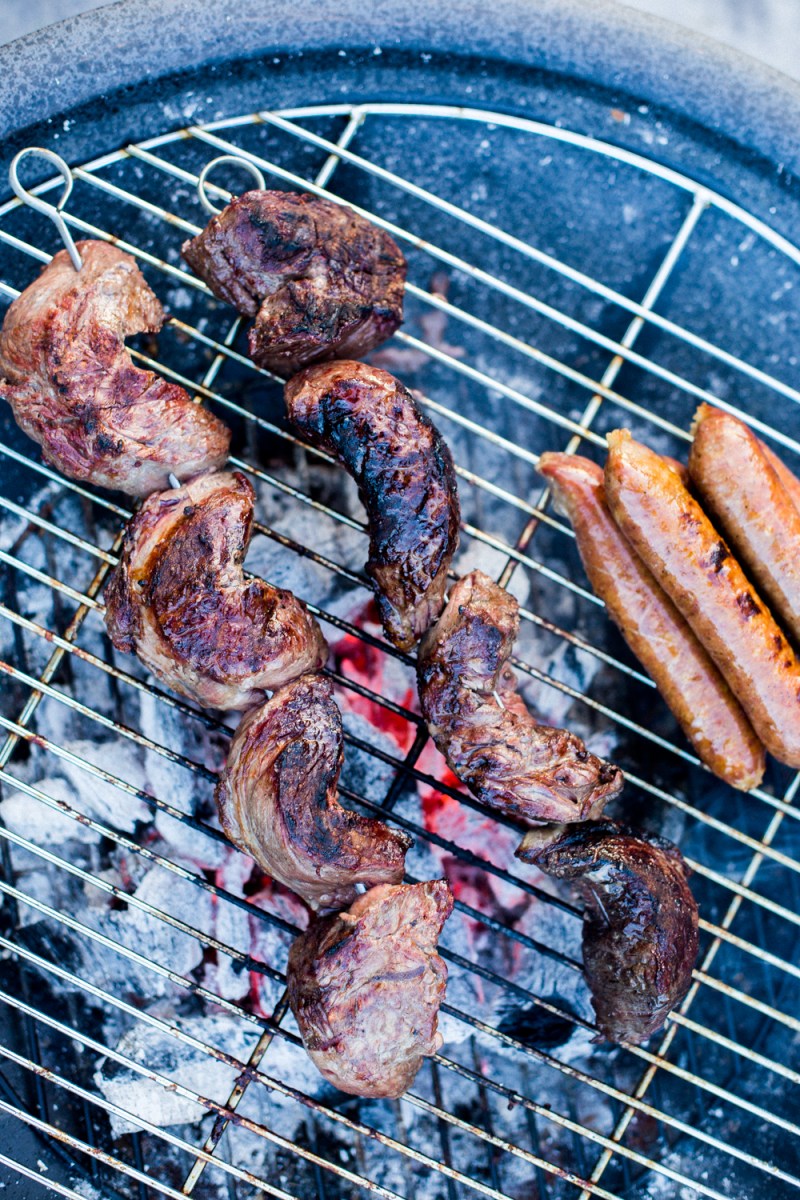
Most of the time, I really appreciate a well-marinated chunk of meat. Or something that’s been swimming in a fragrant sauce for a while. But every once in I while I like to bring dishes back to their basics – and this week’s recipe fits the bill nicely. Picanha (pronounced “Pee-cone-ya”) is about as simple as it can get: skewered rump cap roasted over an open fire, flavored with only sea salt. It’s a staple dish of Brazilian barbecue (churrasco) and one of the more prominent dishes from the region.

A rump cap is hard to find in many American butcher shops, as it’s often incorporated into the cut we call rump roast. If you’re lucky enough to find it in North America, the rump cap is usually identified by a thick layer of fat on one side which flavors the meat as it grills. As an alternative, we used a couple top sirloins from US Wellness Meats, which had a nice layer of fat on one side, mimicking the rump cap perfectly.

This week’s recipe, like last week’s Couve a Mineira, is part of a team-up recipe with my friend Alex Boake. Be sure to check out her illustrated version of this recipe!

Read Full Article

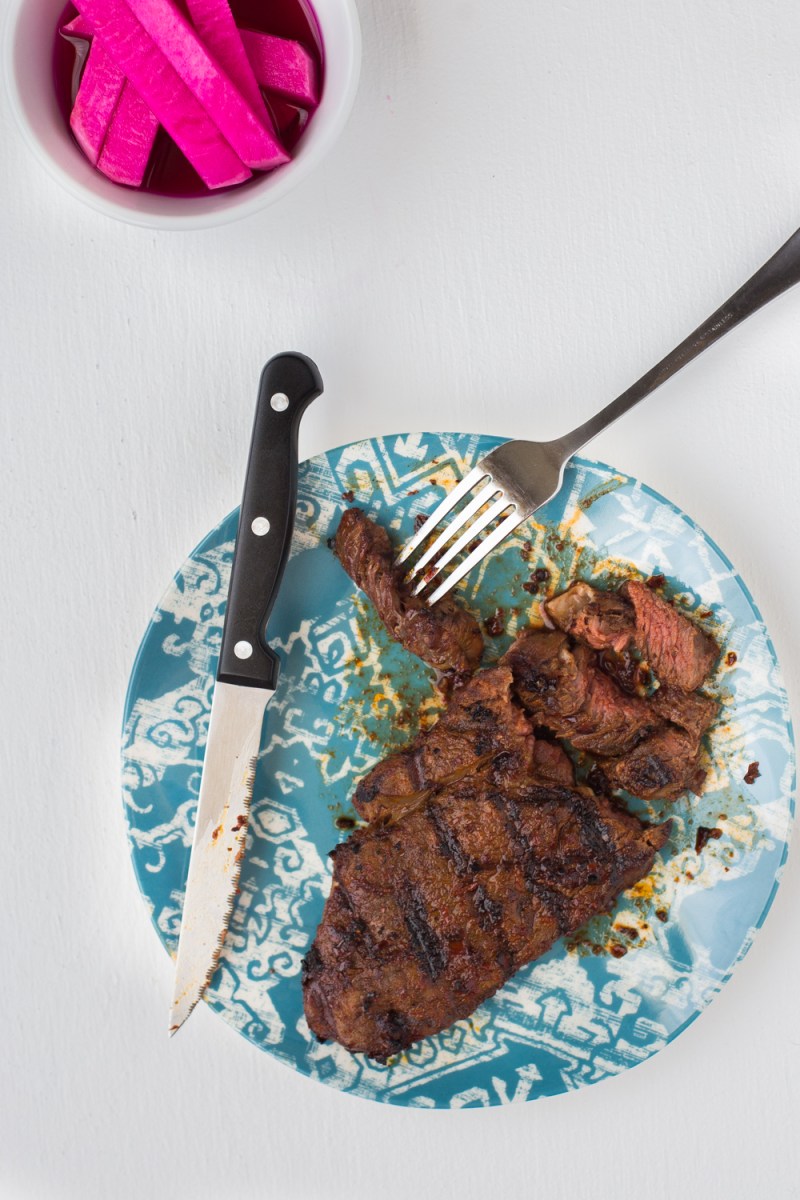
A while back I decided to try out a few new uses for my harissa recipe, besides the lamb tagine dish I posted last year. One great thing about harissa is that it’s so full-flavored that it can take an otherwise simple dish and make it immediately and exponentially complex (not to mention tasty). For example, I tried simply spooning it onto a couple steaks before grilling them, and the taste was ridiculous: the North African condiment formed a nice crust around the steak, but didn’t fully penetrate the pure meaty taste of the steaks themselves. It was a winning combination.

Warning: this is a super simple recipe. I’m still recovering from my trip to Atlanta for the Ancestral Health Symposium, where I spoke about gourmet culinary practices in a Paleo context. I’ll post more about my trip later this week.

Read Full Article

Greater Baltimore area residents: I’m speaking about food and nutrition at CrossFit Glen Burnie on Saturday, July 13th. More info is here.

Like most red-blooded American men, I have a special place in my heart for barbecue ribs. That’s probably pretty obvious, since I have no less than TEN ribs recipes on my site (my favorites are here and here) – that’s nearly 5% of all my recipes!

My taste in ribs has changed over the years, as well as my cooking method; originally I braised my ribs in apple juice and onions for a couple hours, then crisped them over a grill. While I still like ribs that way from time to time, I’ve come to better appreciate smoked ribs – those cooked over low temperatures for extended periods, gently nudged to perfection by wafting curls of smoking cinders.

The trouble is, despite all of my outdoor cooking adventures, I keep pushing off the idea of buying a charcoal grill or a smoker, the usual staples of tasty smoked ribs – my backyard patio only has so much real estate, and I don’t think Mrs. Domestic Man would appreciate more contraptions back there. So I’ve been diligently plugging away at making an easy, foolproof method for smoking ribs on a gas grill, and I’m ready to share the meats of my labor.

To demonstrate, I decided to use spare ribs, which is a cheaper cut of ribs, but they taste just fine to me when cooked properly. I also used a drip pan full of hard cider to flavor and moisten the ribs as they smoked (regular apple cider or water would do fine as well).

Read Full Article

Last year I made a gyro meat recipe based on Alton Brown’s method, which I really like. It’s a great way to use ground lamb, and it produces some really great results. The only thing that prevents it from being an all-time great is that it involves a bit of work – blending everything in a food processor, wrapping it with plastic wrap, letting it sit out for two hours, then roasting it in a water bath. It’s not a huge deal, but not a quick and easy meal by any means. So I’ve always wanted to work out a grilled gyros recipe that produces similar tastes but with minimal work. When US Wellness Meats asked me to try their new lamb tenderloin, it was time to put my new idea to the test.

Gyro meat, often referred to as doner or shawarma meat, is meat roasted on a rotating vertical spit and shaved off. Most Mediterranean and Middle-Eastern countries have some variation of this dish as a common street food. Depending on where you’re getting it, the meat can be made of lamb, beef, goat, chicken or a combination of meats.

Slightly off-topic, but I was recently a guest on the Born Primal podcast, where I talked about my health history and some of my culinary inspirations. Let me know what you think.

Read Full Article

I don’t know about you guys, but after our longer-than-expected winter I’ve been in on a month-long grilling bender. And though I love to come up with tasty marinades for my grilling adventures (Exhibit A: Izgara Bonfile), sometimes I just want a tasty creation that’s also quick to make. The solution is pretty easy, really: you just throw a salsa on top of an otherwise basic grilled steak!

This salsa is inspired by Insalata Caprese, a fresh salad originating from the island of Capri in the early 20th century. It’s traditionally made with tomatoes, fresh mozzarella cheese, oregano, and arugula, but over time most people have substituted the oregano and arugula with fresh basil. We Americans are even weirder in that we also like to add balsamic vinegar as well. For my salsa I decided to keep a little balsamic vinegar and also add a bit of lemon juice to provide some acidity and sourness without an overpowering vinegar taste.

Read Full Article

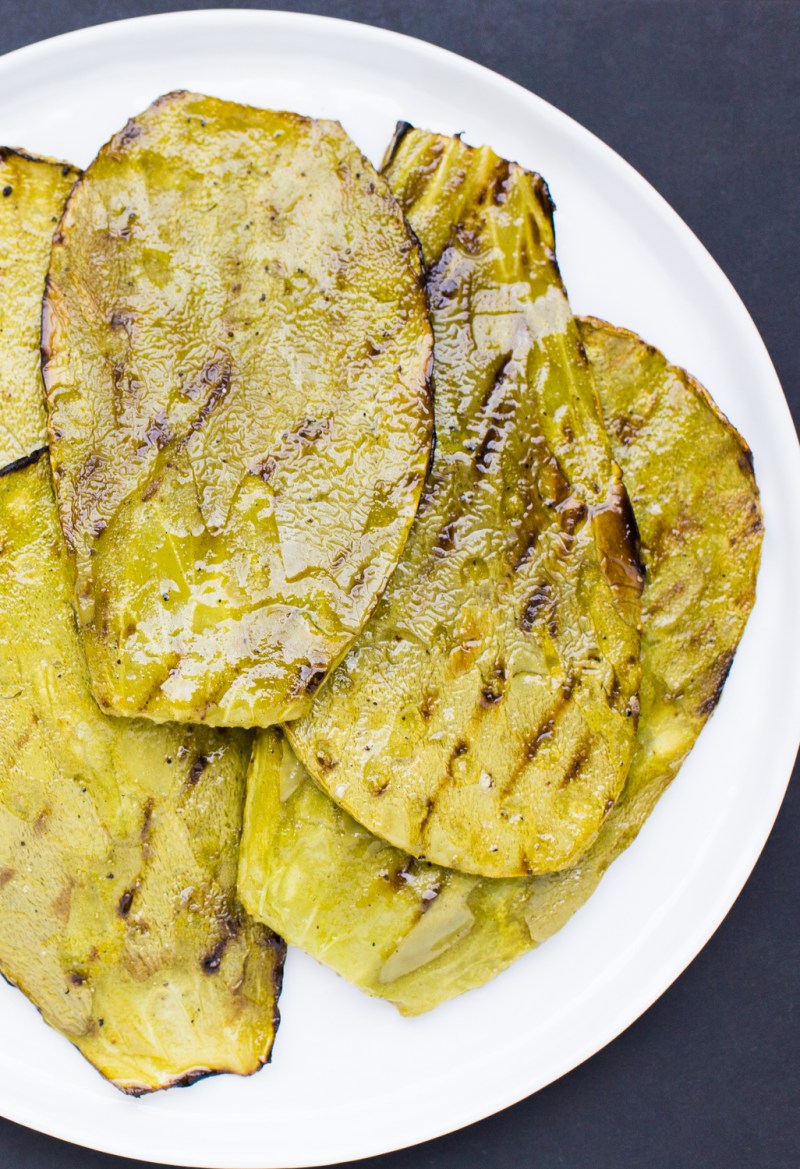
With spring upon us, I’ve been looking to expand my grilling options. The idea of cooking and eating a cactus might sound intimidating, but the reality is much simpler than you’d think. All you have to do is scrape off their thorns, and grill them – it’s that easy.

Nopales are the paddles of oputina (prickly pear) cactus, commonly found in Mexico. They are a common vegetable in Mexico, and taste a little like green beans, but slightly more acidic. They are a great addition to grilled meat dishes, or tasty just on their own. They are also often sliced/diced and served with eggs or in salads.

Read Full Article

While spending a few days in Austin last month, I basically dove head-first into Texas barbecue: the pickles, the vinegar-based cole slaw, and man, the brisket! I loved how a dry, blackened crust over their barbecued meats isn’t a bad thing, and how sauce is added according to individual taste, after plating. Even better, the barbecued meats are sold by the quarter pound, so each person gets to choose how much they want to eat. If that’s not the most American way of eating ever, I don’t know what is! These are all concepts that are relatively uncommon in our neck of the woods here in Maryland, so I decided to try my hand at some Texas-style barbecued beef the other day.

When choosing a meat to try, I decided to go the easy route with some boneless short ribs: they are a great size, and fatty enough that I was sure I didn’t need to worry about them drying out while cooking. Turns out I made a great choice – the short ribs were perfectly moist and tasty, and a great change of pace from our typical method of cooking short ribs (braising).

Read Full Article

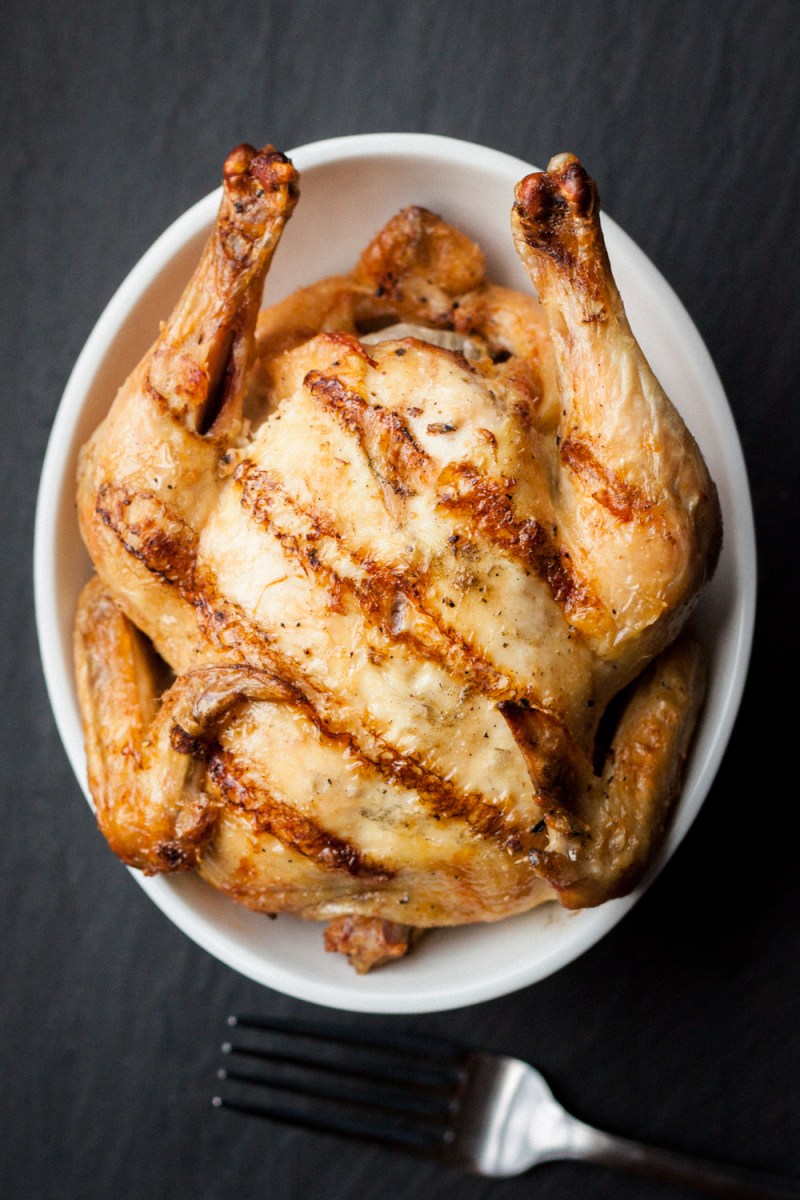
The Cornish hen, often referred to as a Cornish game hen or Rock Cornish hen, is a hybrid chicken first developed in the United States in the 1950s. Besides being much smaller than its predecessor (the Cornish-Rock chicken, which is the common “broiler” chicken worldwide), it also generally has a higher white-to-dark meat ratio than its big brothers. Some other interesting tidbits include the fact that the Cornish “game” hen is not a game bird at all, it can be either male or female, and it reaches maturity within 30 days.

I love cooking these little bird because they’re the perfect single-person meal. You get the best of everything! Both drumsticks, both wings, and both oysters. I also find cooking Cornish hens easy and stress-free, and they can be ready in much less time than a full-sized bird.

Read Full Article

Some eagle-eyed readers may recall that in my Memphis-style barbecue beef back ribs recipe from earlier this year, I only used half of the huge 16 lb. package of beef back ribs that US Wellness Meats sent me. I had been eyeballing the remaining two racks of ribs for a while and I decided to take a different approach to the ribs this time; the Memphis-style recipe was a lot of fun, but it also took a lot of work (and some specialized equipment) to get that perfect taste. This time around, I wanted to make something that was ridiculously easy and still produced some high-quality, juicy, and tender beef ribs.

So I turned to my dear old gas grill, and let the magic of indirect heat run its course.

Read Full Article