paleo

You’ve heard of Samosas, right? They’re those triangle-shaped savory pastries served in Indian and Central Asian restaurants. They’re a surprisingly ancient dish, first mentioned in the Middle East (under the name Sambosa) during the 10th century before eventually making their way across Central Asia, the Indian subcontinent, and even Southeast Asia. They’re practically everywhere today – you can even find them pretty easily in South Africa, as Indian cuisine started to influence British colonial food culture.

I loved Samosas in my pre-Paleo days, and I’ve been wanting to tackle them for a while. The problem is, well, pastry. I tend not to fiddle with baked goods and leave them up to the masters (see: Jenni Hulet and her book, My Paleo Patisserie). So after a bit of brainstorming, I settled on the idea of Samosa-flavored mashed potatoes. I like this idea because, heck, most people are probably eating mashed potatoes anyway, so why not kick them up a notch in terms of flavor and vegetable count.

Read Full Article

Folks, I have some great news for you – Paleo Takeout was sent to the printer last night! In celebration, I’m totally going to buck a few trends here. Instead of teasing you with snippets of the book, only showing off the very best dishes, I’m just going to let you see the whole shebang right now! This is the actual visual index taken straight from the book. I’m confident that once you see this full recipe list, complete with the picture for each recipe, you’re going to flip a lid.

Bear in mind that many of these recipes have variations and sub-recipes listed for them. For example, the combination of techniques, rubs, and sauces for the wings yields 20 different experiences! Similarly, there are 8 different types of ramen in this book. All told, there are over 200 recipes in Paleo Takeout – how awesome is that? Read on to see everything that is included in the book when it releases on June 23rd.

Read Full Article

Chile Colorado (sometimes spelled Chili Colorado) is a Mexican dish featuring a red sauce and tender pieces of beef.

There is a lot of excessive naming in the world of chile peppers. For example, the primary chile used in this dish, the New Mexico chile, is often called a Chile Colorado in Mexico; it’s not due to a poor grasp of American geography, but because the names once denoted their place of origin. Similarly, the Anaheim chile, which is a milder version of the New Mexico chile, is so named. The Spanish word Colorado also can mean “red”, so who knows. Granted, each of these peppers have subtle differences in flavor, but it all makes for a confusing shopping experience.

To give the sauce its best flavor, I found that blending a fresh jalapeño into the sauce adds a tangy dynamic. If possible, use a ripe red jalapeño, also known as a Fresno chile (see! confusion!) instead of a green one, as the former will have an earthier taste; but it’s not a deal breaker.

Read Full Article

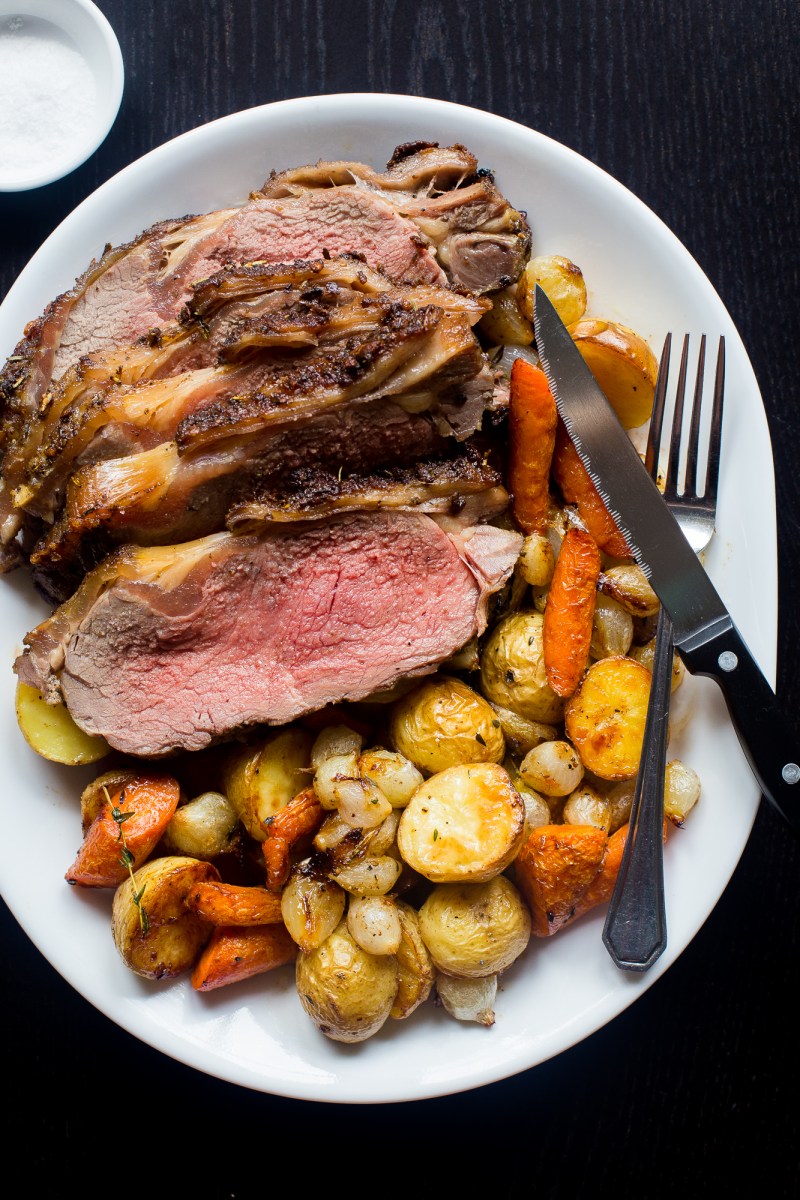
The NY strip loin, sometimes called loin roast or top loin, is a cut taken from the top of the cow’s short loin. The short loin is located near the spine, past the ribs but before the tenderloin and round. This is a crowded area of the cow in terms of butchery, as the porterhouse and tenderloin also come from this section. In fact, this strip loin is basically an uncut series of NY strip steaks. Confused yet? Don’t worry, you don’t need to know how to break down a cow in order to cook up this delicious specimen.

We’re going to roast this loin in a method similar to my most popular post, this Perfect Eye of Round. We’ll blast the roast at 500F to create a nice crust, then reduce heat to 250F until it’s medium-rare.

Not one to leave a job half done, I also roasted some veggies with the strip loin. In duck fat. Naturally. To quote one of my favorite Navy war-era posters, “We Can Do No Otherwise.

Read Full Article

So, I’m apparently way behind on my blog posts, since I’m sharing a corned beef recipe a month after St. Patrick’s Day! Truth be told, I’ve been so busy traveling and working on Paleo Takeout that I didn’t have a chance to make this holiday meal until recently, but it turned out so well that I wanted to share it with you folks immediately. Part of why it worked like a charm is because of my handy Instant Pot electronic pressure cooker, which cut the cooking time of this dish down to just over 90 minutes.

The corned beef I used for this dish was this uncured corned beef brisket from US Wellness Meats. Because it is traditionally preserved (without the use of sodium nitrite), it doesn’t have the pink color that we’re accustomed to when we think of modern corned beef. But fear not – it tastes just as good as what you’d expect.

The term “corned beef”, as you have probably guessed, has nothing to do with corn. A logical conclusion would be that it is seasoned with peppercorns, but that’s not the case, either. The secret is that in medieval times, “corn” was a description of salt when in a large-grain form. So really, it just meant salted beef, which is a process that has been around for thousands of years. The specific term “corned beef” is traced as far back as the 11th century in Ireland (600 years after St. Patrick was around, by the way). The concept of eating corned beef and cabbage (sometimes referred to as New England Boiled Dinner) on St. Patrick’s Day is a mostly American concept; a more appropriate Irish dish to enjoy on St. Patrick’s Day would be Colcannon.

Read Full Article

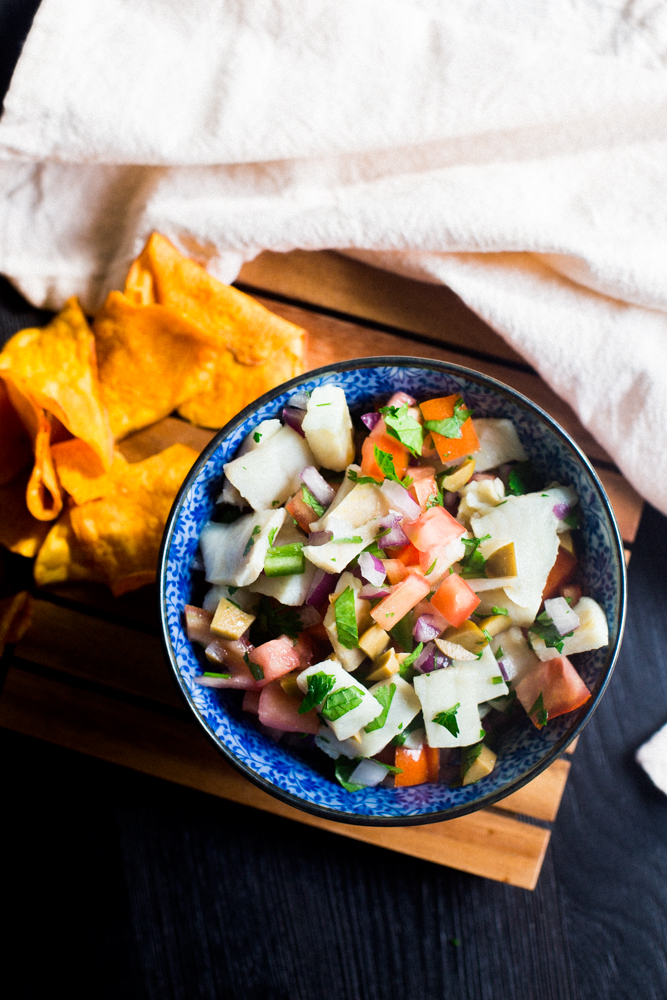
Ceviche is a popular seafood dish in Central and South America made from raw seafood (usually fish or shrimp) marinated in citrus juices. Today, it is most associated with Peru, who even has a holiday to celebrate the dish (June 28, if you’re interested). Spaniards arriving in the Americas found that the pre-Inca peoples of Mocha had a similar dish, which used the fermented juices of the banana passionfruit. There is archeological evidence of ceviche’s consumption as far back as 2,000 years ago.

Unlike Peruvian ceviche, the Mexican variation often includes tomatoes, jalapeños, and green olives. That’s the variation we’re going to make today.

When choosing a fish, it’s best to use a white ocean fish like sea bass, grouper, halibut, or flounder. Keep the fish as cold as possible while preparing it, and be sure to remove the blood line (the dark line down the center of some fish) to keep the dish from tasting too “fishy”. I also prefer to combine the ingredients near the end; red onions steeped in lime juice will color the dish prematurely.

Read Full Article

We’re currently vacationing in Orlando this week (and consulting my Disney guide from time to time). The weather is perfect, the crowds are terrible (as expected), and our son Oliver is having a great time relaxing and getting away from the stresses of kindergarten. In preparation for our trip, I decided to revisit one of the first recipes I posted on this blog, beef jerky.

It’s amazing how jerky has endured as one of my all-time favorite foods since childhood. The word “jerky” itself is borrow from the word ch’arki, which translates to “dried, salted meat” in the Quechua language (spoken in the Andes region of South America).

Read Full Article

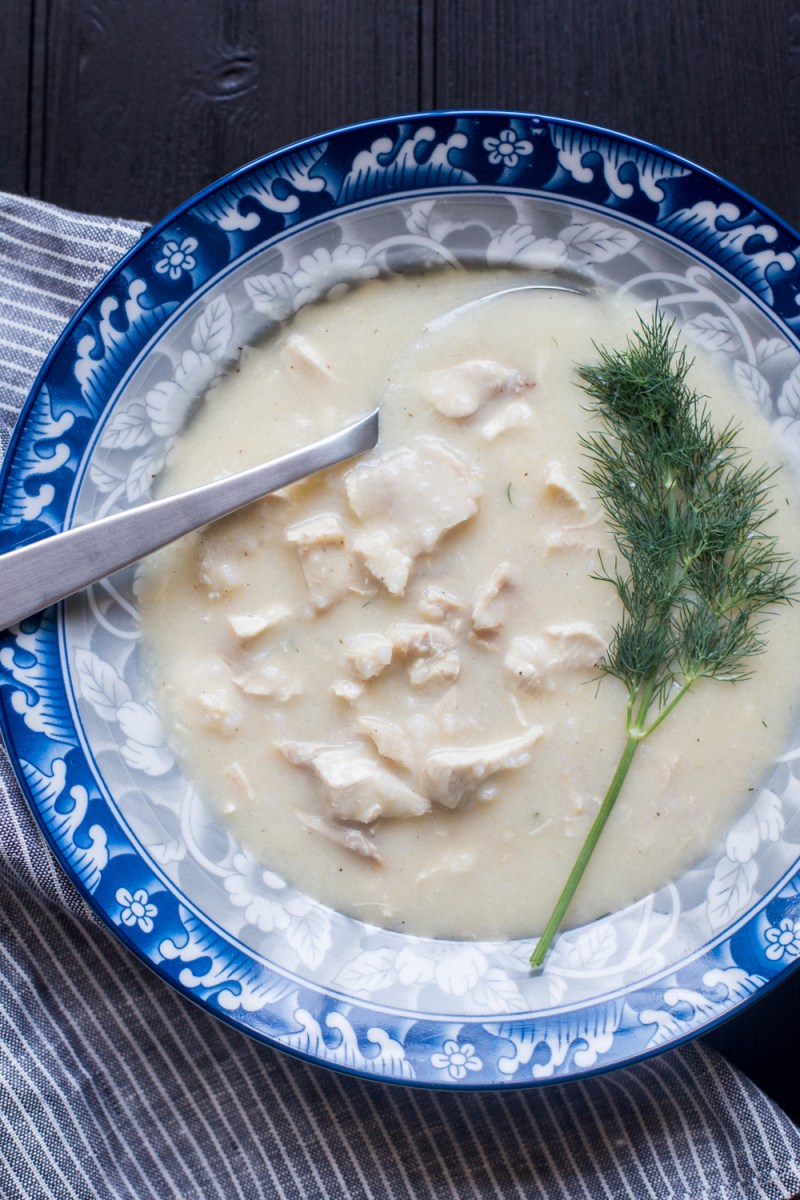
Avgolemeno is a Mediterranean sauce and soup, most commonly associated with Greece. As a sauce, it’s often served with Dolma or used as a vegetable dip. But if you ask me, it really shines the most as a mild and comforting soup, and that’s why I’m sharing this recipe with you today. It features egg yolks and lemon juice which enrich and enliven the soup, and some fresh dill brings it all together to give it a distinct and just slightly exotic flavor.

I’m a big fan of taking my time when making recipes. After all, cooking is one of my main sources of relaxation (second only to reading cheesy sci-fi). But I realize that’s not always the case for folks, so I’m trying something new today; below you’ll find a “short version” of the recipe that can be made in 20 minutes, as well as the traditional 2-hour version. Let me know what you think. If you like it, I’ll try to incorporate more variety into my recipe posts (kind of like how I’ve been adding pressure-cooker versions to some recipes).

Read Full Article

First of all, great news: Paleo Takeout is now available for pre-order! Alright, back to the food.

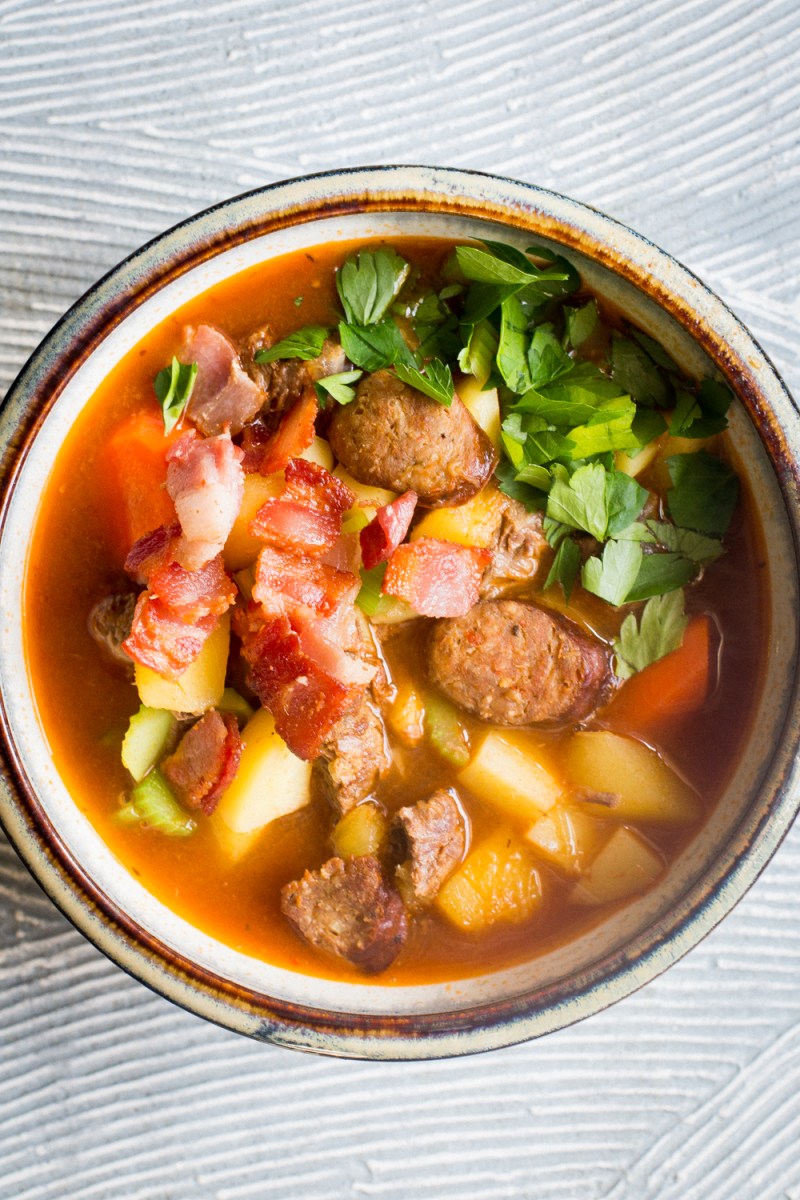
Puchero is a popular stew in many Spanish-speaking countries (the word puchero means “stewpot” in Spanish). There are many variations to this dish, but I was especially drawn to the version that comes from the Río de la Plata region, where Argentina and Uruguay share a border. One dish from this area in particular is called Puchero Criollo, indicating it is of Creole origin. That led me to read up a bit on Creole history, and that settled it – this was the dish I wanted to share with you folks.

The term “Creole” generally refers to cultures of mixed European and native heritage. The most popular use of the term in the US is Louisiana Creole, indicating those descended from French or Spanish colonists prior to the Louisiana purchase. In terms of this stew, Puchero Criollo refers to a dish that is inspired by its Spanish heritage but uses items native to the Río de la Plata region; in this case, beef (primarily osso buco) is the common protein used in this dish since cattle are plentiful in the region. To have a little fun with the dish, I added a few staples of Louisiana Creole cuisine to the stew, like Creole seasoning and some andouille sausage.

In keeping with the tradition I started a while back, I’ve included Instant Pot electric pressure cooker instructions for this dish, to cut down on the cooking time. stovetop instructions are also included.

Read Full Article

Mole is a term used for a number of sauces in Mexico. On its own, the word usually implies Mole Poblano, a dark red sauce made with poblano peppers. This sauce, Mole Verde, is a lighter, fresher version of the sauce, made with pepitas, blended herbs, and tomatillos.

A traditional herb used in this dish is epazote, which is a pungent, weed-like herb. It’s also commonly added while cooking black beans, because it reduces the gassiness that follows after eating those magical fruits. If you can’t find epazote where you live, never fear – flat-leaf parsley will work in a pinch.

Many variations of this dish call for stewing the chicken in the sauce. But I started thinking about the fact that this sauce can be put together in about 20 minutes, and it’s a tragedy that you’d have to delay the cooking time by so much in order to stew the chicken (and lose some of the sauce’s fresh taste along the way). Instead, I figure that there’s a better way to get dinner on your table; you can roast a chicken (or buy a rotisserie chicken) separately and combine it with the sauce to serve. I particularly like the contrasting flavors of the bold, refreshing sauce and the tender roast chicken. It’s making me hungry all over again just typing this. Enough talk; let’s get cooking.

Read Full Article