recipe

It’s funny, but up until recently I assumed there was already a ketchup recipe on my blog. I didn’t discover its absence until I developed Thursday’s recipe (hint: it rhymes with “beet oaf”), when I couldn’t find my recipe online. At first I was confused, and thought the search function of my blog was definitely broken. So…sorry about that, and here you go.

The history of ketchup is pretty awesome. It all started with garum, an ancient fish sauce first used by the Ancient Greeks and later the Romans. It reached Asia some 2,000 years ago via trade routes, and became a staple in many Asian countries, particularly Vietnam (where they later perfected the sauce using anchovies). Vietnamese fish sauce as we know it today entered China about 500 years ago, and the Chinese (particularly those in the Southeast providence of Fujian) spread it around the rest of Asia. The Fujian word for fish sauce? You guessed it, ketchup. In fact, many Asian languages today still use a form of the word “ketchup” to refer to sauces; a common example is the Indonesian word kecap (pronounced “keh-chap”), a catch-all term for fermented sauces.

When Europeans arrived in Asia in the 1600s, they were enamored with fish sauce (they’d long forgotten about garum) and took it back to Europe. Many variations of ketchup existed in Europe for hundreds of years, the most popular being walnut ketchup and mushroom ketchup (the practice of using fish eventually died out). It wasn’t until the 1800s that people started adding tomatoes to the sauce, and H. J. Heinz took it to a new level in 1904 when his company figured out a way to bottle and preserve the sauce using natural ingredients (the mid 1800s were full of horror stories about deadly batches of ketchup made with stuff like boric acid and coal tar). Heinz was also one of the first to add copious amounts of sugar to the sauce.

My recipe still maintains the sweet and sour taste we’ve all come to expect from ketchup, but throws a historical twist in for good measure: a bit of fish sauce.

Read Full Article

Bacalhau à Brás is a Portuguese dish using salted cod (bacalhau), eggs, and potatoes. The Portuguese were one of the first European cultures to fish for cod, making huge harvests and preserving the fish off the coast of Newfoundland shortly after Columbus discovered the New World. Since then, this salted cod has been an integral part of Portuguese culture, and it’s often said that you can cook a new recipe using bacalhau every day of the year (some say there are over 1,000 recipes that include this fish). Advances in fishing technology in the mid 20th century had collapsed the Northwest Atlantic cod market by the 1990s – cod takes a long time to mature, and overfishing had run rampant. Today, bacalhau is most often made using cod harvested from Arctic waters under more strict quotas.

Bacalhau is made by salting and drying the fish in the sun; while it was originally a method of preservation (salted cod keeps a long time even without refrigeration), its unique, strong flavor is unmistakable and delicious, and its popularity endures today. The only downside to eating bacalhau is that it requires a bit of foresight, since it needs to be soaked overnight to reconstitute the fish.

Bacalhau à Brás is one of the most famous Portuguese dishes, and is considered the ultimate comfort meal in Portugal. The dish uses many of the quintessential ingredients found in Portuguese cooking – bacalhau, eggs, potatoes, and black olives.

Read Full Article

Last weekend, I did a couple book signings with my friends Sarah Ballantyne (The Paleo Mom) and Stacy Toth (of Paleo Parents). It was a lot of fun. On Saturday night, Sarah and Stacy slept over at our house, so I offered to make dinner for them; Sarah and Stacy follow a modified version of the Autoimmune Protocol (a more restrictive version of the Paleo diet meant to reverse autoimmunity, see this post or Sarah’s book for more info), so I knew I had my work cut out for me. How do you treat your friends (and food bloggers at that) to a delicious meal with a limited cupboard to work with?

For the main course I made a modified version of my Beef Rendang recipe, where I subbed some butternut squash puree for the bell and chili peppers, and used mace instead of nutmeg. I think the squash added a good amount of body to the dish; it turned out well. I served it with cauliflower rice sautéed in coconut milk, turmeric, cinnamon, and raisins – also good.

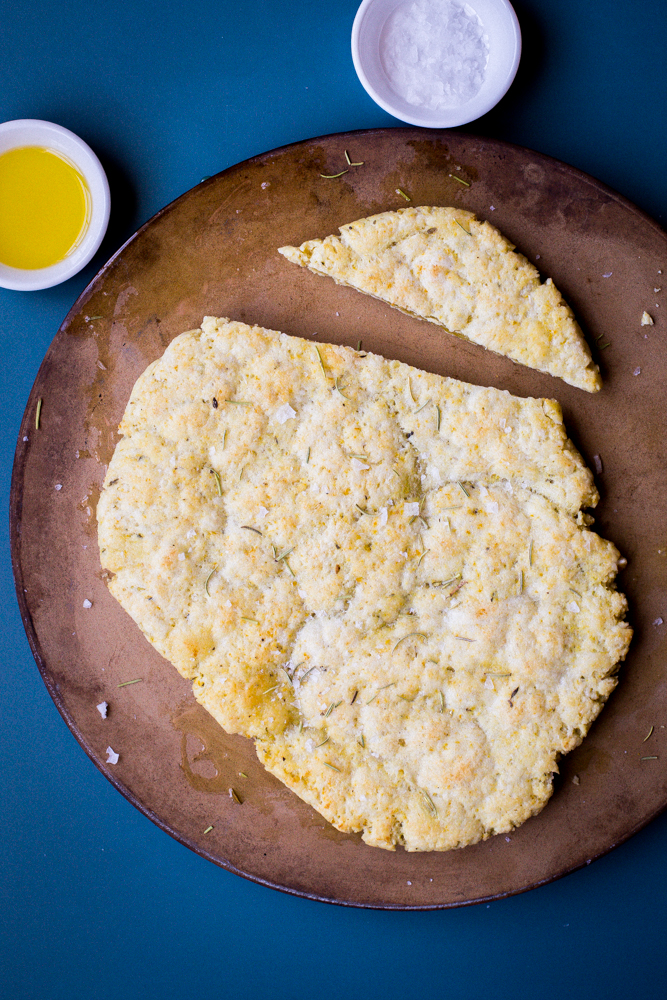
But I wanted to add another texture to the dish, so I tried out a more savory version of my pizza crust recipe, made AIP-friendly by eliminating the dairy and egg typically used in the recipe. I couldn’t have been happier with the results – the bread was nice and crisp, and adding nutritional yeast imparted a rich, buttery taste.

Read Full Article

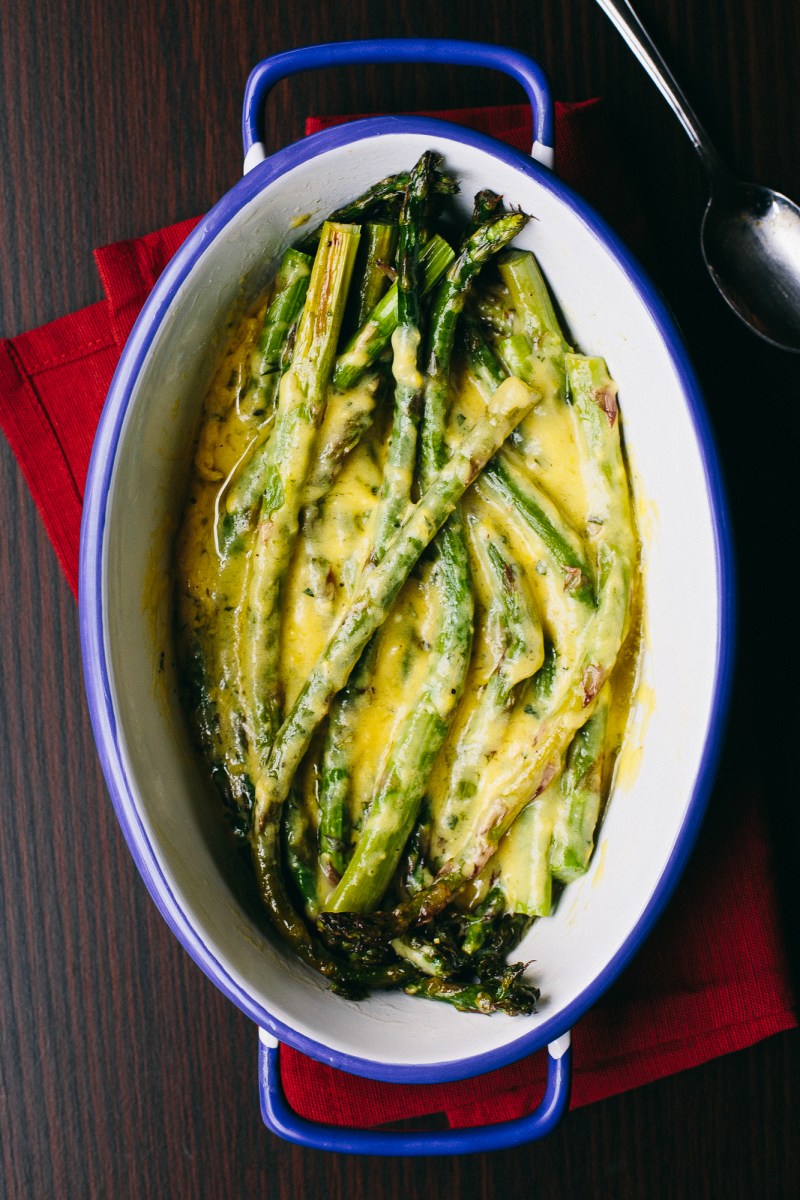
Roasted asparagus is no big deal, right? To roast asparagus, you basically just roast asparagus – not really worthy of a dedicated blog post. But pair this under-appreciated vegetable with a traditional Béarnaise sauce and you’ve got something spectacular. It’s funny what a few egg yolks and some butter can do.

Asparagus is an ancient vegetable, found in records dating back 5,000 years. In fact, an asparagus recipe appears in the oldest surviving cookbook (Apicuius, 4th century AD). While widely used by the Greeks and Romans, it nearly disappeared after the fall of the Roman Empire, only to be reintroduced in the late Middle Ages by the French.

Béarnaise sauce is relatively modern, first developed in the 19th century. It is often associated with Hollandaise sauce, as it employs a similar technique of emulsifying fat (butter) in egg yolks and acid. While Hollandaise is made with lemon juice, a Béarnaise is made with an herb-infused vinegar reduction. The sauce has nothing to do with bears, or the capital of Switzerland (Bern), but rather is named after Béarn, a former province in southwest France. Fun fact: d’Artagnan (one of the main characters in The Three Musketeers) was from Béarn.

My friends at Pacific Merchants donated this Enamour dish for my recipe, which was pretty cool of them. Enamel-coated stoneware is very sturdy and versatile, and this dish is a thing of beauty. It can be used for baking and broiling, but in this case I used it as a serving dish. They are also offering 25% off purchases on their site for my readers, valid March 4-12, 2014! Use code DomesticMan at checkout.

Read Full Article

Callaloo is a Caribbean dish that originated in Africa. It is typically made with amaranth leaves (aptly called callaloo in the West Indies), taro leaves (dasheen), or water spinach; since these plants are somewhat hard to find in the United States, spinach is a common replacement stateside. There are many variations of this dish, and my recipe follows the Trinidadian version, which includes coconut milk and okra. In the Caribbean, Callaloo is often served as a side dish, but when I make it, it almost always turns into a main course. I’m not the type of guy that craves vegetables often, or vegetable soups for that matter, and I crave this dish. A lot.

I think I could eat my weight in Callaloo. I don’t know what it is about this dish that makes me go crazy about it. For one thing, I feel like a superhero after I eat it – like I’ve consumed a week’s worth of vegetables in one sitting. It’s also ridiculously delicious, and carries a unique flavor despite using fairly common ingredients. The only ingredient in here we don’t eat regularly is okra, since my wife isn’t a fan of okra’s slimy texture; luckily, the texture is cleverly masked in this dish.

Read Full Article

A couple weeks ago I did a guest post on RobbWolf.com, which was pretty exciting for me. I first heard of the Paleo diet through his book, The Paleo Solution, and considering how profound of an impact it made on my health, it was just surreal to join forces with him.

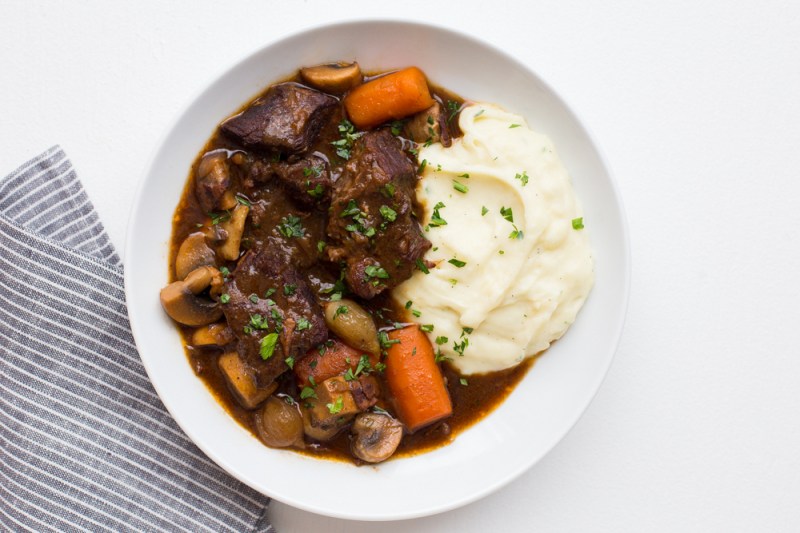
For my guest post, I deconstructed the entire history of one of my favorite dishes – Beef Bourguignon – including the individual histories of every ingredient used in the dish and the people who made it. It took a fair bit of research to put it all together, and I think it’s a very interesting read, though a little longer than my typical blog posts. For posterity’s sake, I decided to move the article to this blog in case you wanted to check it out. Enjoy! The link to my recipe is at the bottom of the post.

Read Full Article

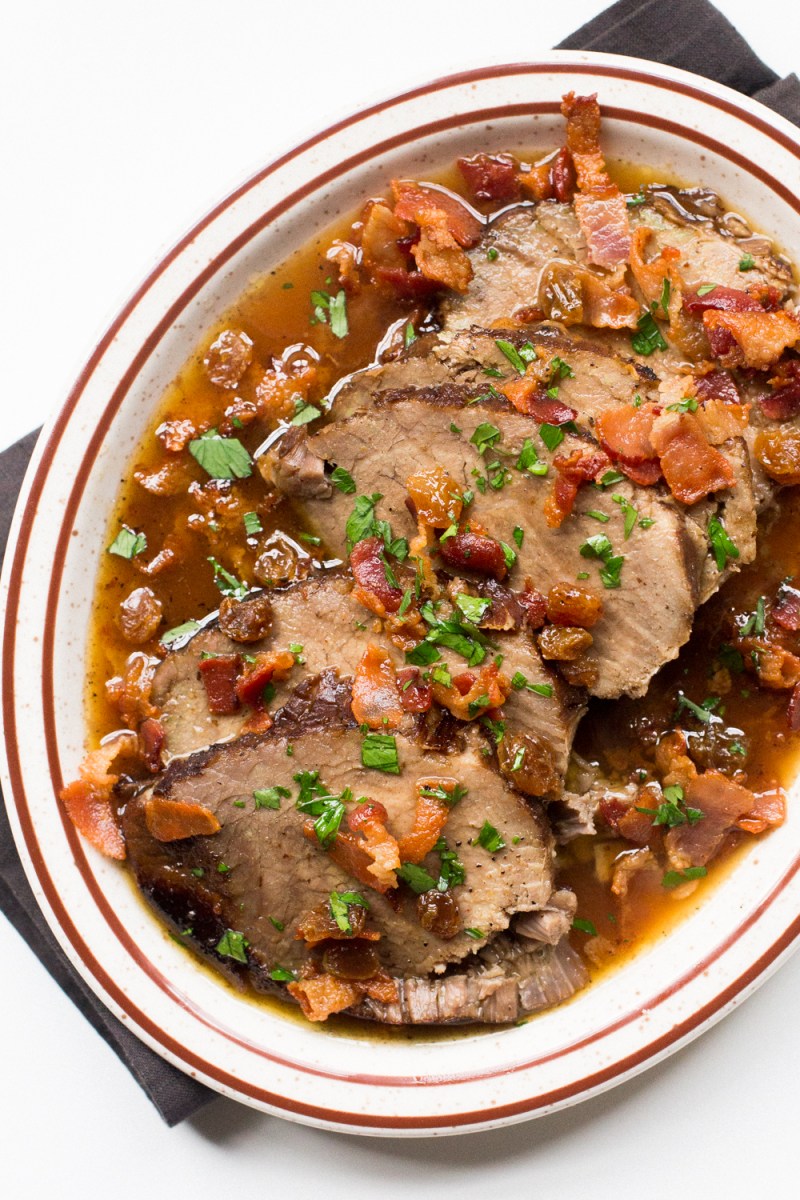
Sauerbraten (“Sour Roast”) is a German pickled roast. Traditionally made with lean horse meat, this dish works well with any lean roast. For my recipe in particular I used eye of round roast. This dish is unique in that the meat is tenderized in a wine or vinegar marinade for several days, probably a carryover from ancient preservation methods.

To counter the sour taste of the meat, Germans today commonly add gingersnap cookies to the roast’s gravy; personally, I used a bit of honey and golden raisins to cut its sourness, a custom found in Rheinischer Sauerbraten (Sauerbraten from the Rhine region in West Germany).

The eye of round roast for this recipe was graciously donated by Friends & Farms, a Maryland-based community that provides high-quality food baskets from local farms and artisans. They build the baskets with certain recipes in mind, and provide the recipes each week; each basket is designed to complement your eating habits, and is enough food for about three meals per week. You can also customize your baskets for a more Paleo-minded lifestyle, which is really cool.

Better yet, they are giving away a free weekly food basket to one of my readers – if you’re in the greater Baltimore area, click here to enter the giveaway via Rafflecopter. The giveaway ends ends midnight (EST) Saturday, Feb 22nd, 2014 and is limited to Maryland-area residents; you’ll need to be able to pick up your winnings at one of their many pickup locations. Good luck!

Read Full Article

Today is kind of a big deal for our family. After nearly two years of work, The Ancestral Table is finally in stores today! To celebrate, I thought it would be fitting to post my cookbook recipe for Japchae, which is a common party dish in Korea today.

Japchae has its origins in the 17th century; fittingly, it was first served at a party for the reigning king. Originally made with just vegetables and mushrooms, sweet potato noodles (dangmyeon, also called glass noodles) were introduced in the 20th century and are now an integral part of the dish.

Read Full Article

I know, it’s totally unfair of me to be writing about how people like my book when it won’t release until Tuesday! I’m a big jerk. But I wanted to take a minute and thank the people that have helped to bring some attention to The Ancestral Table during these past couple of weeks, and to share some of their impressions of the book. Without further ado, let’s dig in.

Read Full Article

Bouillabaisse is a traditional Provençal (Southeast France) stew, typically made with fish and shellfish. Although it was originally made with rockfish, today it’s also made with all sorts of different seafood. For this recipe in particular, I decided to go with lobster and mussels; I like the idea of pairing two foods that are at opposite ends of the price spectrum (lobster = rare & elegant, mussels = common & unglamorous). This dish is paired with my lobster stock recipe, so be sure to check that out since you’ll need some stock. Putting this dish together – stock and all – is actually a fairly quick experience: in about 90 minutes you’ll have a recipe that will have your dinner guests swooning.

Don’t let the assumed costs of buying lobster deter you. If available in your area, live lobsters are surprising affordable when compared to the going rate at a seafood restaurant. And really, sometimes you can’t put a price tag on eating a rich, classic meal in the comfort of your own home.

Also, don’t forget that I’m hosting a giveaway this week; click here for a chance to win two live 1.5 lb lobsters from lobster.com ($65 value)! The giveaway is limited to continental US residents and ends midnight, Saturday, Feb 8th, 2014. Good luck!

Read Full Article