Food

NOTE: An updated version of this recipe appears in my cookbook, The Ancestral Table.

Animal fat gets a bad rap this days, mostly because we’re scared of those totally-dangerous saturated fats. The old fast food joints used to cook their fries in lard (rendered pork far) or tallow (rendered beef fat, also known as suet) until the low-fat craze of the 70s forced everyone to use vegetable shortening (and their lovely, cancer-causing trans fats). I’ve looked around for animal fats to use in cooking but all I’ve found is partially-hydrogenated lard, and I’ve come to learn that the hydrogenation process, while useful because it allows for the lard to be kept at room temperature, also has trans fats. While we’re still searching for pork fat to render lard, our local Whole Foods has been more than happy to set beef fat aside for us as they trim their cuts down for sale. Within a day they had 10 lbs of beef fat for us, which I rendered into tallow the other day.

There are two ways to render fat – “wet” or “dry”. Dry rendering is simply leaving fat pieces to cook on low in a stockpot or crockpot until the fat has liquified (leaving cracklings for later), but the fat can burn and leave a bad taste in the tallow. I decided to do a wet render (which basically involves boiling the fat pieces until the liquid fat has been extracted). I found the whole experience to be surprisingly easy.

Read Full Article

Making gravy from scratch is one of my favorite things to do. I love the idea of taking a flavor that’s derived from the meat you’re cooking, adding some seasoning and making something that’s similar but complementary to the whole meal. I’ve been making gravies since my first cooking job as a teenager, and I’ll tell you right now – you’re going to make some truly awful gravies at some point (at least I did). Hopefully this little guide will help steer you in the right direction.

Gravy is simply the combination of two elements: flavor and thickener. Let’s start with flavor.

Read Full Article

I’ve probably read about this somewhere, but the other day I decided to try and use cauliflower instead of rice, and I was surprised by the results: the texture was similar, and I couldn’t taste any cauliflower in the dish at all (and we used an entire head for about four servings).

Read Full Article

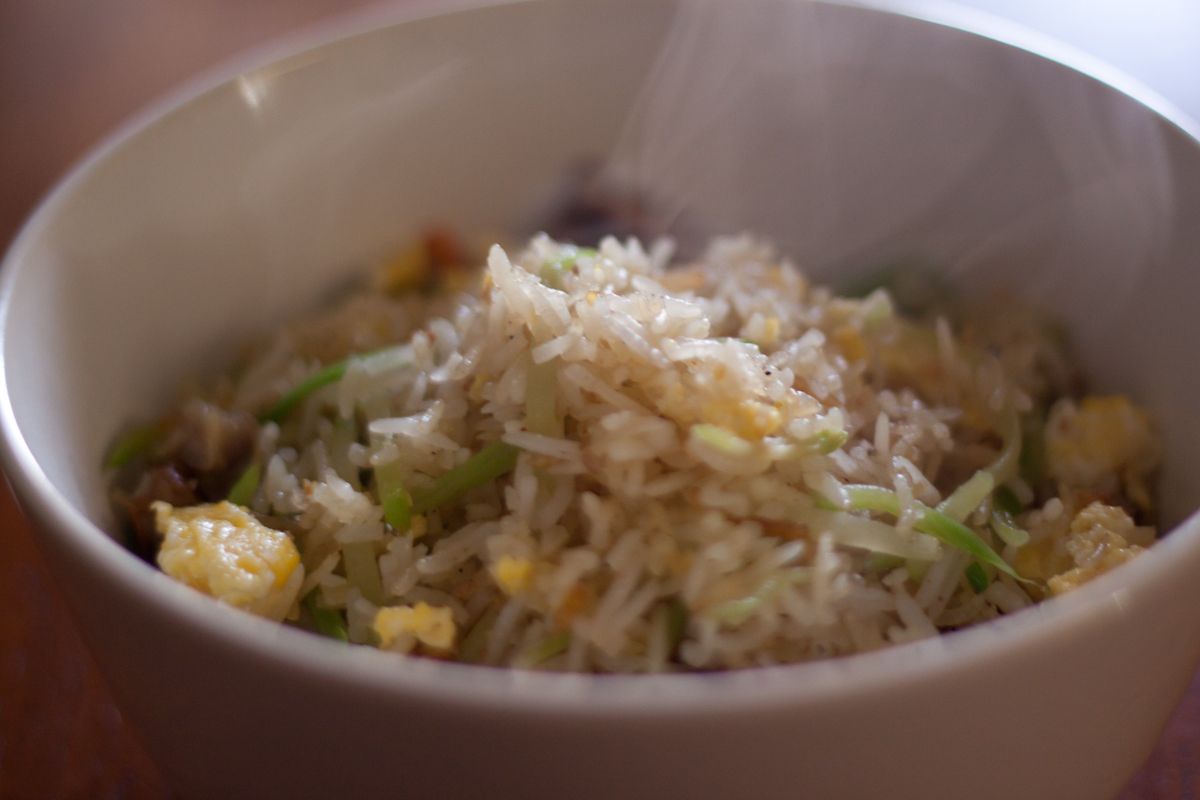
I’ve dreamt about opening my own restaurant for over ten years now. I’ve wanted it to be a tiny little place that I would open later in life, when I already have a steady retirement paycheck and no desire to make it a “career”. I’ve always imagined that the fare would be a mix of American, Latin American, Italian and Asian cuisine – basically the 10 best dishes that I have made over my lifetime. After making the jump to gluten-free/Paleo, I’ve been feeling like my restaurant dreams are far-fetched: how could I make American food without potato, Latin American food without tortillas, Italian without pasta, or Asian without rice? Last night I sat down and put together a dish that made me think that I just might be able to start a Paleo-friendly restaurant someday – while fooling the non-Paleos (let’s just call them “muggles”) into liking it.

Read Full Article

Bacon was a hot commodity in my house growing up – four siblings can do that to a family. I fondly remember watching anxiously as my mother cooked the bacon and we fought over who was getting the next slice. We were told that we couldn’t eat too much, because bacon was bad for us. And that’s how it was back in the day, during the height of the saturated fat craze. Now things are turning on their head and experts are starting to believe that carbs/sugar, not fat, are what causes all those heart problems that we unfairly pinned on poor bacon. And it makes sense. If the human race evolved over the course of millions of years eating mostly meat, how would it be that newly-introduced products like grain and sugar are better for us?

Read Full Article

One thing I’ve found over this past month is that eating Paleo, in spite of all of its benefits, can get a little boring. Not only that, it can take a lot of consideration and planning to eat right. So I’ve decided that if we’re stuck out of the house, the following solution is a quick fix.

Wendy’s offers a 1/2 lb. Double with Cheese for a fair price. Their burgers are 100% beef (although grain-fed, which many Paleo fanatics would say is a no-no) and only have a little salt added. The burger has one slice of cheese, sandwiched (pun intended) between the two patties. This means you can toss the bun, peel the patties apart, and put the condiments in the middle with minimal mess. I got it without sauces since we have high-quality and paleo-friendly ketchup and mayo at home. The cheese is high in sodium and has a little soy in it (cultured milk, water, cream, sodium citrate, salt, sodium phosphate, citric acid, sorbic acid, artificial color, enzymes, soy lecithin to keep the slices from sticking).

I’d prefer In-N-Out any day, but for where I live, this is probably the best burger (tasting and health-wise) option in a pinch. And I’d be lying if I didn’t say it was delicious. I can see this becoming a once-a-month treat in the future. I’ll most definitely be inspecting Arby’s and Chipotle next.

Full Wendy’s nutrition info here.

As you’ve doubtlessly surmised from my blog description page, my main reason for starting this website is to gain a better understanding of mankind’s lineage, through our role in the ecology – by creating food (gardening) and enjoying it (cooking). I stumbled upon a relatively new lifestyle that’s slowly gaining ground – the Paleolithic Diet – and I’ve come to believe that some of the characteristics of this diet are in keeping with this site’s values.

The Paleo Diet assumes that our bodies evolved over millions of years in a world before agriculture, meaning that there was no place for mankind’s current staples of grain, corn and legumes in our diet. Study has also led many to believe that most of our health problems (especially autoimmunity) are linked to gluten and excess carbohydrates. The Paleo Diet simply removes these items from your diet – no wizardry, no gimmicks, etc. Basically, you replace a high-carb diet with a high-fat diet consisting of meat, poultry, seafood, veggies, fruits, nuts and berries. The diet seems like an all-encompassing version of other, successful lifestyle choices, like the gluten-free diet.

This idea interested me so I’ve decided to give it a shot. Honestly, I’m not a huge fan of bread so I already had a head start. I’ve been doing it for about three weeks now, and I’ve had mixed results: initially, I went full-on Paleo, even removing some inflammation-related food items like dairy, potatoes, tomatoes, nuts and seeds. But after a couple weeks I was starting to lose too much weight (I’ve already lost about 10 pounds and I’m a relatively thin person), so I’ve decided to re-introduce all of the above items. Rice is a hotly contested item (shunned by the Paleo Diet as a grain, but welcomed in other low-carb diets like the Perfect Health Diet), so we’ve decided that if we’re going to have any starch in our diet aside from tubers (potatoes, yams), we’re going to have white rice. As far as dairy is concerned, we’re only eating the high-fat items (which goes against everything that I’ve learned before) like butter, cream, cheese, and european-style yogurt.

Probably the best side effect of this diet is that our family has cut out almost all processed foods, since they all contain some form of wheat, soy, or corn. Personally, I feel much healthier (no more post-meal tiredness or gas) and have been sleeping more soundly. We’ve also been choosing healthier food products like nitrite-free meats and grass-fed beef, which actually taste really good. I definitely miss beer, though.

If you’re interested, here is a 12-step process taken from this Paleo nutrition blog.

1. Eliminate sugar (including fruit juices and sports drinks that contain HFCS) and all foods that contain flour.
2. Start eating proper fats – Use healthy animal fats or coconut fat to substitute fat calories for calories that formerly came from sugar and flour. Drink whole cream or coconut milk.
3. Eliminate gluten grains. Limit grains like corn and rice, which are nutritionally poor.
4. Eliminate grain and seed derived oils (cooking oils) Cook with Ghee, butter, animal fats, or coconut oil.
5. Favor ruminants like beef, lamb and bison for your meat. Eat eggs and some fish.
6. Make sure you are Vitamin D replete. Get daily midday sun or consider supplementation.
7. 2 or 3 meals a day is best. Don’t graze like a herbivore.
8. Adjust your 6s and 3s. Pastured (grass fed) dairy and grass fed beef or bison has a more optimal 6:3 ratio, more vitamins and CLA. A teaspoon or two of Carlson’s fish oil (1-2 g DHA/EPA) daily is good compensatory supplementation if you eat grain-fed beef or no fish.
9. Proper exercise – emphasizing resistance and interval training over long aerobic sessions.
10. Most modern fruit is just a candy bar from a tree. Go easy on bags of sugar like apples. Stick with berries and avoid watermelon which is pure fructose. Eat in moderation.
11. Eliminate legumes
12. If you are allergic to milk protein or concerned about theoretical risks of casein, you can stick to butter and cream and avoid milk and soft cheeses.

Considering that this diet is quite a lifestyle change, I expect this blog to shift focus a little bit, if only to offer more Paleo-friendly recipes. For further reading, I suggest the links found on paleohacks.com.