Page 36 of 55

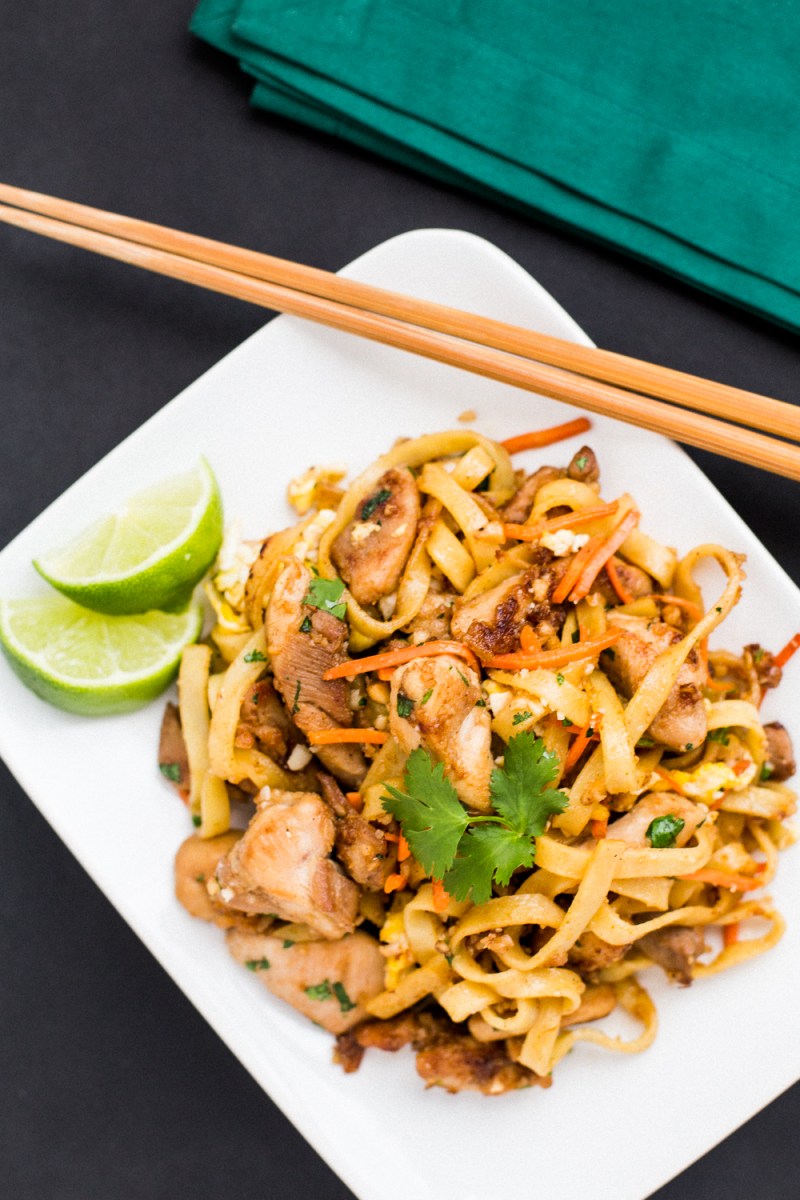
It’s somewhat surprising, but Pad Thai, despite being one of Thailand’s national dishes, is from Vietnam. Originally influenced by Chinese cuisine, the dish was relatively unknown in Thailand until the 20th century. It actually was part of a Thai government campaign in the 1940s to create a national dish that both reflected the Thai spirit and also increased rice noodle production to help propel their economy. There’s a really interesting history of the dish to be read here.

This recipe is a long time coming, and something we’ve been cooking for years. For a while I was content with pre-made sauces like Mae Ploy’s, but I was never happy with its high sugar content and the fact that it has MSG in it. So I decided to work out how to make it from scratch, and I couldn’t be happier with the resulting product. This is the real deal.

And to make things even more interesting, for this particular photo session I thought it would be neat to try out Cappello’s gluten-free, grain-free fettuccine noodles instead of our usual rice noodles, and I was surprised by how well they worked! Instructions on how to make them with traditional rice noodles and zucchini noodles are included as well.

Read Full Article

With our extended winter this year (spring is finally springing in our neck of the woods this week!), I found myself craving comfort foods to help me get over the cold-weather blues. And for that very same reason, I decided to focus on an American classic for this week’s recipe – one that some might consider a quintessential comfort food. Believe it or not, it’s very hard to find any sort of origin or history around the combination of sausage, peppers and onion. It’s a staple food of Fenway Park, so it must be a Boston thing, right? But others associate it with NYC, and still more with Chicago. All I can say with certainty is that it’s of Italian-American descent, with fairly deep roots, and an easy way to make a quick delicious meal.

The word “sausage” originally comes from the Latin word salsus, which means “salted.” There is evidence of it being enjoyed in Italy as much as 2,000 years ago. That it has a long culinary existence isn’t so surprising; sausage is a perfect way of making sure every bit of the animal is used, and deliciously so. Here in the US, the words “Italian sausage” imply a seasoning based on fennel seeds and anise, and can be sold as either mild or spicy.

Read Full Article

Who doesn’t love spinach? Besides kids, I mean. Actually, funny story, kids are more apt to eat vegetables if they watch Popeye. Personally, I despised it growing up, but now I love spinach in all forms – raw, blanched, or simmered (as in this recipe); it has a mild and unique taste with each preparation.

This recipe is modeled after the German dish Rahmspinat (“creamed spinach”), and it mostly true to the original except for the fact that this particular recipe is dairy-free. So I guess the more appropriate term for this dish would be Spinat. If you’d like to prepare it more true to the original dish, I’ve added instructions below!

Read Full Article

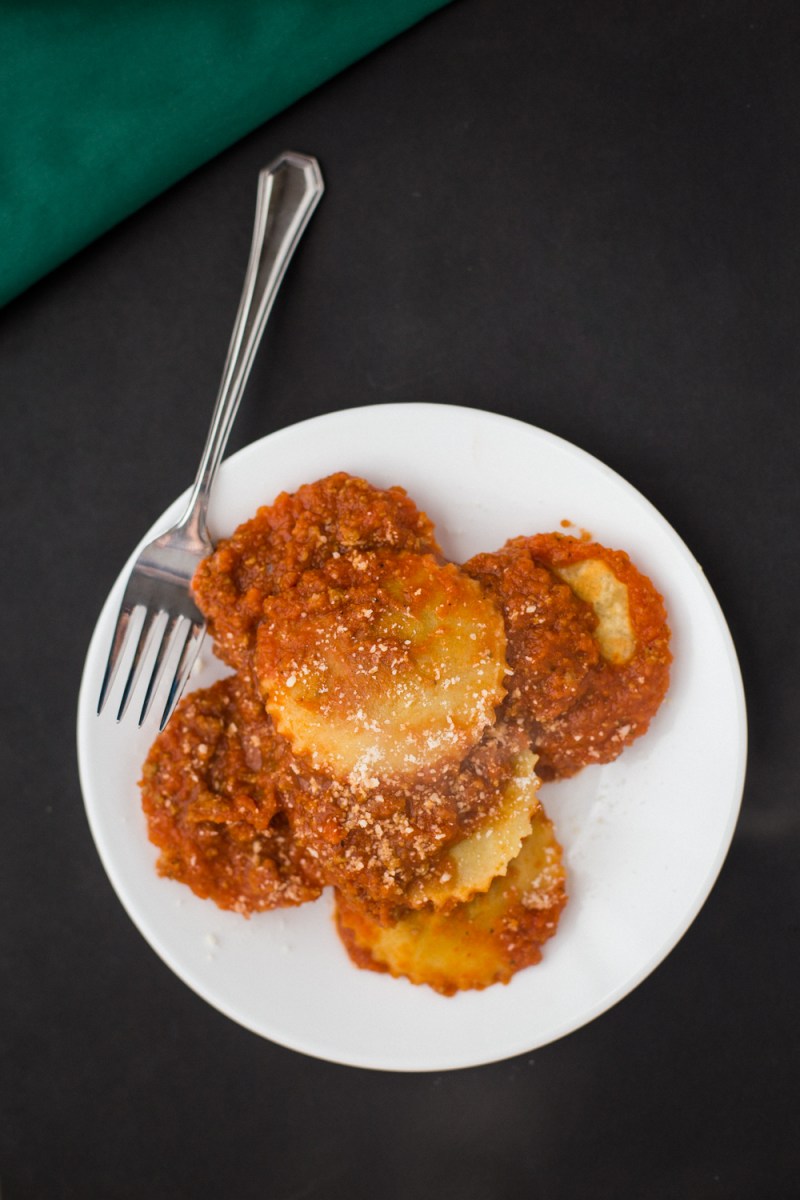
When removing gluten from my diet a couple years ago, one dish I assumed I would never taste again was ravioli. Seriously, how could I pull that one off without flour? I’m sure it could be done, but it would take weeks, even months, of trial and error. I love ravioli, but frankly, not enough to put myself through that kind of ordeal. Luckily, a moment of genius struck me when trying to figure out something unique to make with my most recent batch of Cappello’s Gluten/Grain Free lasagna sheets. They did all the hard work for me; I just had to put everything together.

Ravioli has been written about since the 1300s, so logic dictates that it’s been around longer than that. It probably took a while to get the attention of the scribes, right? There are countless variations of ravioli, but since this was my first time making it in years, I wanted to style it after my childhood favorite – Chef Boyardee beef ravioli!

Read Full Article

Earlier this week I wrote a guest post for my friends Matt and Stacy (aka Paleo Parents), here is the post for those of you that missed it:

Meet Oliver. He turned four years old last month, and has been eating the Perfect Health Diet version of Paleo (includes white rice and some dairy) since he before he was two. He loves Star Wars, Legos, and anything Disney. He has his ups and downs, but for the most part he’s a pretty adventurous eater, and I thought it would be fun to share what we’ve done to encourage healthy eating behaviors.

Read Full Article

A few weeks back I did a guest recipe for Nom Nom Paleo, and I thought I’d share it here on my site for posterity’s sake.

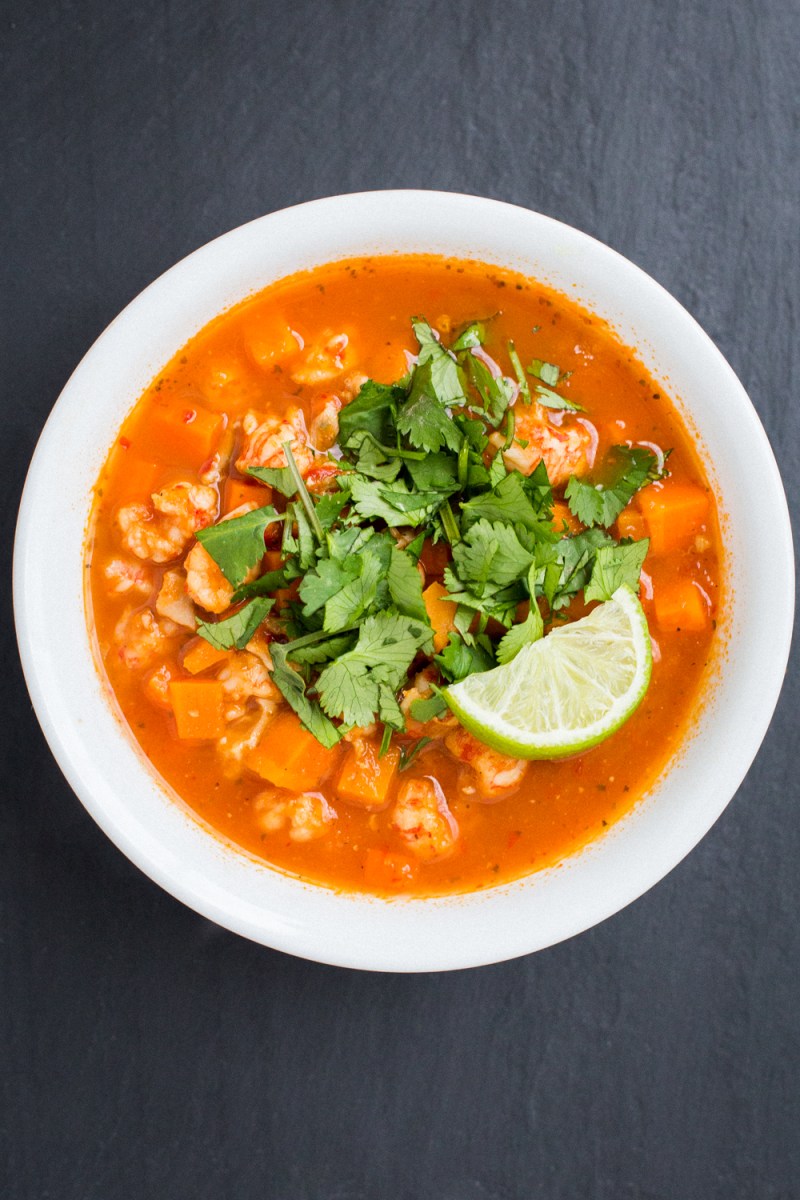
Langostinos (Pleuroncodes Monodon, also called “squat lobsters”) are small, lobster-like crustaceans most often fished off the coast of Chile. They are found in abundance worldwide, but sadly, they are rarely caught for human consumption; instead, they’re used as feed in fisheries, mostly because they carry a certain pigment that helps color farm-raised salmon and trout. They have a sweet, shrimpy tasty to them and can be found for relatively cheap – so if you can get your hands on them, definitely give them a try.

This recipe in particular is modeled after a traditional Mexican soup, Caldo de Camarón, which is typically used with shrimp. If you don’t have any langostinos on hand, shrimp can be used with this recipe.

Read Full Article

Like most of the Paleo world, I caught wind of Joshua at Slim Palate a few months back when he revealed that not only is he a teenager, but he lost over 100 lbs during his journey to find health and fitness. Incredible story aside, I immediately respected his photography and sense of style (I can’t imagine what my sense of “style” was at age 17!); he’s got an elegant eye that shows up in his pictures.

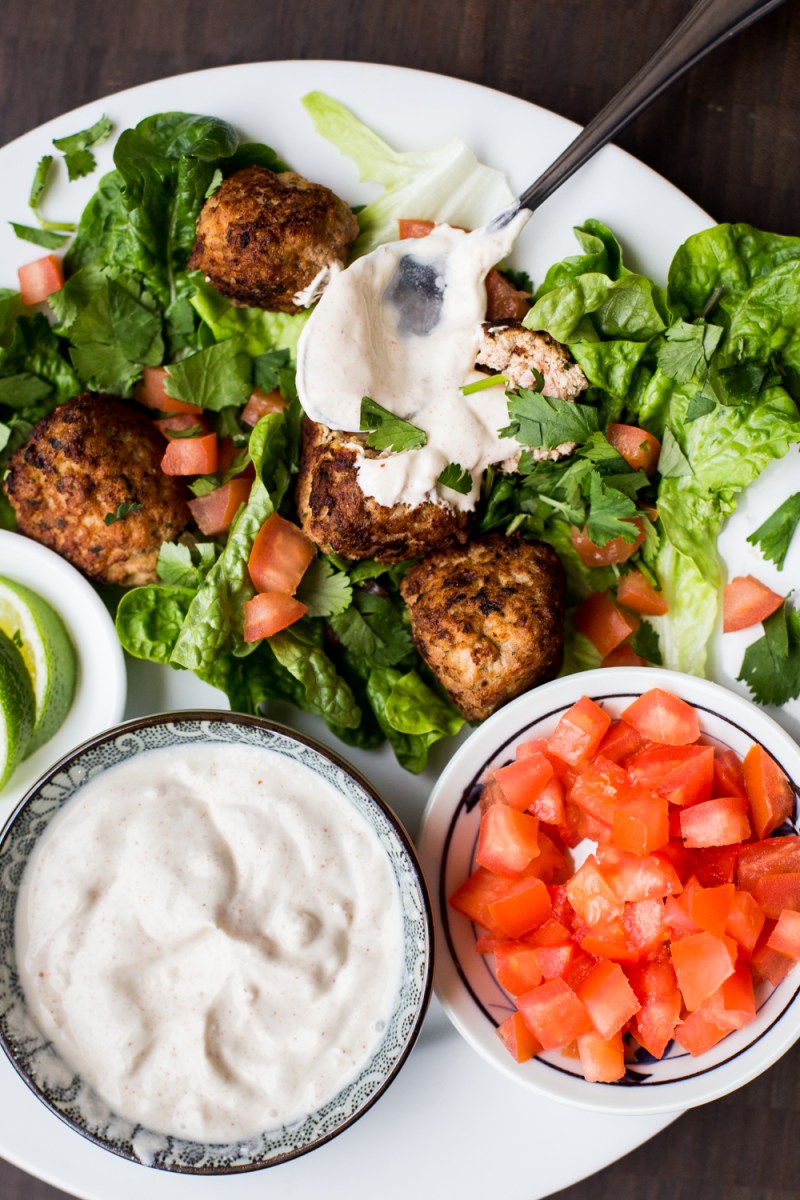
After a bit of chatting, I offered to do a recipe swap, where we recreate one of each other’s recipes, with allowance for tweaks. I chose to do one of his earlier recipes, Chipotle Dijon Turkey Meatballs, while he made a stunning rendition of my Rogan Josh recipe. My take on his original recipe is pretty faithful, but I added a creamy sauce on the side, modeled after the cream sauce typically found in traditional-style fish tacos.

Read Full Article

We eat watermelon a few times a year, and usually throw the rinds into the compost pile. I figure that’s what most people do. But a while back I ran across the idea of pickling the rinds, and I was immediately hooked on the concept; I love the idea of using a quick, simple pickling process to render something that’s usually inedible into a delicious, tangy, and crunchy treat.

It might sound a little weird at first glance, but watermelon pickles have been around for a while. While in Germany and Eastern Europe they tend to pickle the red flesh of watermelon, there are a few Scandinavian recipes that focus on pickling the rinds. In the US, there are records of people making pickles of watermelon rinds dating back to the Civil War; those original recipes call for soaking the rinds in a salt brine, then boiling with sugar, vinegar, cloves, and cinnamon until clear and soft, which turns it into something resembling a sweet relish. I went with a Scandinavian approach, but left a little of the flesh on the rind in order to add a little natural sweetness to the pickle and to aid in the fermentation process (bacteria likes sugar!).

Read Full Article

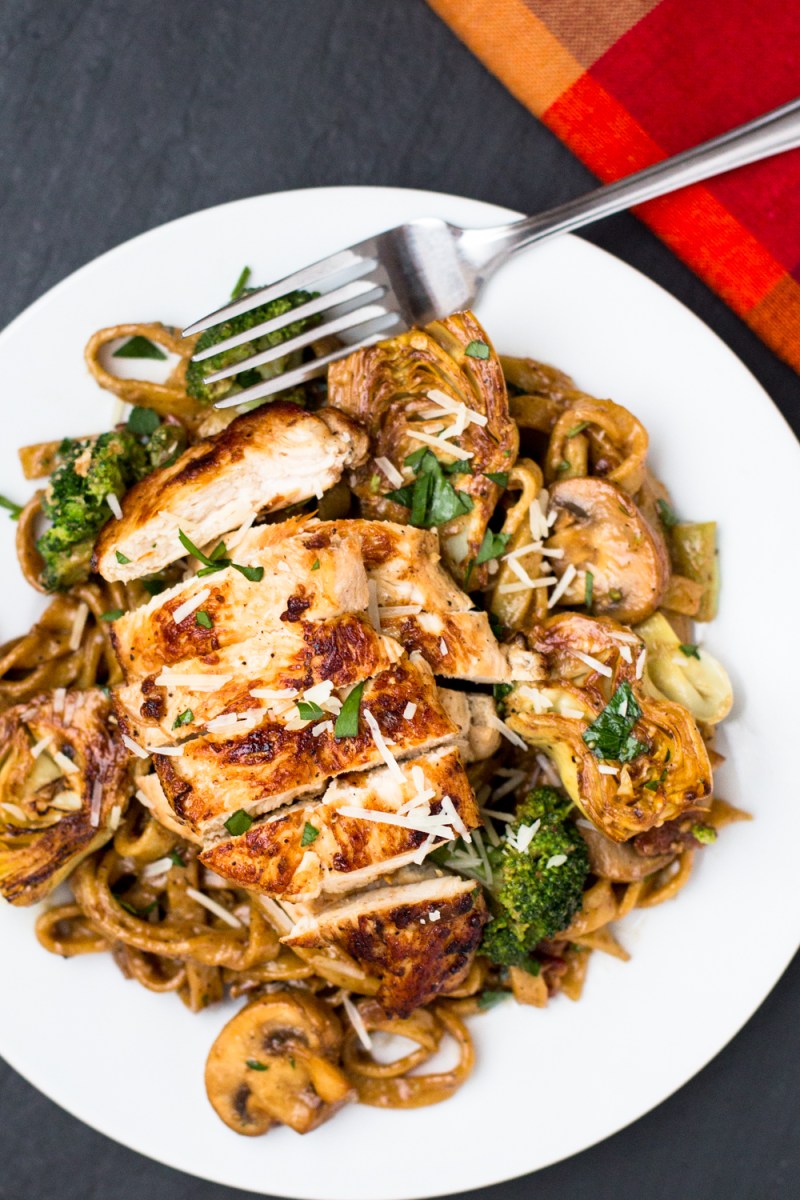
While researching some Italian pasta-based chicken dishes, I came across a dish called Chicken Francesca more than once. I loved the name, and all it implies: the Italian word Francesca literally means “from France”, so to me the name Chicken Francesca means it’s an Italian dish that is cooked using French culinary methods. The problem is that the recipes I found that carried the name were vastly different from my initial impression: some were baked using breadcrumbs and cream, others were mushroom-intensive and served over rice, and still more were linked to a restaurant in Boston known for breasts sautéed in a skillet with artichokes and parsley.

So I decided to take my favorite elements of some of those recipes to make something even more unique: an Italian pasta dish that borrows heavily from French culinary methods! Namely, I focused on creating a heavily-browned skillet in order to deglaze it to serve as the base for my pasta sauce. I also used a milder shallot instead of the traditional onion found in many Italian pasta dishes, and added fresh parsley right at the end of the dish, which is so often found in French cuisine.

Read Full Article

Chicken Marbella is a dish first introduced in The Silver Palate Cookbook in 1982. Its unique combination of prunes, capers, and green olives quickly captured the hearts of home chefs and remains a family favorite in many households throughout the United States today. So when a friend requested that I make an adaptation of the recipe, I was happy to give it a shot and see what I could do.

And truth be told, I didn’t make many changes from the original recipe, because it’s already delicious and uses whole ingredients. However, I only used dark meat (instead of a quartered whole bird) to make sure all of the pieces cooked evenly. I also made some minor ingredient changes, like adding half an onion and using a butter and honey glaze instead of a brown sugar coating typically used in this recipe. Altogether, it all adds up to a slightly magical experience: a gourmet-tasting dish that’s dead simple to make!

Read Full Article