

Baking chicken breasts in the oven seems like a foolproof method, but often results in dry, bland meat. Here’s a simple baked chicken recipe with minimal involvement.
Baking chicken breasts in the oven seems like a foolproof method, but often results in dry, bland meat. Here’s a simple baked chicken recipe with minimal involvement.

Hands down, the worst thing about switching to a strict Paleo diet is its systematic eradication of all good Mexican food. No tortillas (corn or flour), no beans, no rice, and no cheese? Sheesh. Even with our adjusted version of the diet (which includes dairy and rice), Mexican food still doesn’t seem as tantalizing. I’ve been experimenting a bit and have finally come up with a tortilla-free recipe that it worth sharing – despite the fact that it looks alarmingly like a casserole.
This recipe liberally uses queso fresco, which you should be able to find in any international food market. It’s a mild white cheese that’s used in most authentic Mexican dishes.

NOTE: An updated version of this recipe appears in my cookbook, The Ancestral Table.
If you’ve ever been to a Vietnamese restaurant and not headed straight to the pho section of the menu, you may have tried lemongrass pork, which is a sweet/savory grilled pork dish. I decided to incorporate these unique flavors into thick-cut pork chops (because face it, there’s only so many ways to cook pork chops) and I added a citrusy pan sauce on top for good measure.
Brining is an essential part of juicy pork chops (even the traditional Vietnamese recipe calls for marinating overnight), so be sure to start this recipe well in advance of dinnertime.

Taco seasoning seems to be something that we all run out of when we need it the most. Luckily, you can make it easily using ingredients you probably already have in your spice rack.

You’ve probably noticed by now that I place certain banners underneath each recipe – “gluten free, paleo-friendly, perfect health diet-friendly, contains dairy” – and I thought I should explain them a little better.

NOTE: An updated version of this recipe appears in my cookbook, The Ancestral Table.
Successfully making BBQ ribs is probably the most hotly-debated item in my repertoire. True BBQ experts insist that the only way to cook ribs is over a slow heat outdoors for a long period of time (read: all day). My recipe creates consistently-good BBQ ribs that all but narrow-minded purists can easily enjoy.

No burger should go without fries. Unfortunately, making fries at home is a mildly infuriating process, because each cooking method has serious flaws. Frying them on a stovetop can produce excellent results but uses a lot of precious oil. Reducing the oil produces uneven results and dried out potatoes. Baking them in the oven generally results in either soggy or crispy-beyond-belief potatoes. I set out to find a better oven fries recipe to save on oil costs as well as the messy, tedious work of frying potatoes in batches. I found one through Cook’s Illustrated that works well, and with a few modifications, is also Paleo-friendly.
This recipe is unique in that you cover the fries with tinfoil for the first few minutes to steam them. Also, you add salt and pepper to the pan BEFORE adding the potatoes, which actually works to keep the fries from sticking to the pan as well as evenly coating them.

Making a good pot roast is a infinitely rewarding experience; how else can you take a relatively cheap and tough piece of meat, leave it alone for a few hours, and have a rich and delicious meal waiting for you at the end? Sunday roasts are a tradition here in the Western world, and we don’t make this dish often enough. I have two simple rules when it comes to judging a successful pot roast: 1) it should never require a knife to cut, and 2) gravy should be minimal and complementary, and not used as a quick fix for a dry roast. Many cuts of beef can be used for pot roast, but I have found that a chuck roast has the perfect blend of affordability and marbling.
Let’s talk about how I approach this dish, and most other roasts. The term “to roast” actually means to cook in a dry heat, which can often result in a dry dish. Roasting in its most effective form is over an open flame or a rotisserie, which is definitely not what we’re going for with this dish. Most of the “roasting” I do is actually “braising” – roasting it in liquid – which is also commonly called “pot roasting” (you can see the ambiguity, right?). Braising a piece of meat is important because it allows the meat’s connective tissue to melt, resulting in a tastier and more tender dish. With a dry roast, you are likely to have a dry meat with hardened connective tissue.
I should also mention that this roast, and many of my other dishes, wouldn’t be possible without my incredible Le Creuset French Oven. What makes this oven ideal is its heavy cover which keeps moisture locked in. Its $275 price point might seem steep, but you can use it in hundreds of ways and has a 101-year warranty. If you’re going to have only one dish for the rest of your life, I say that you’d be safe with this one.

NOTE: An updated version of this recipe appears in my cookbook, The Ancestral Table.
Lomi lomi salmon is a traditional Hawaiian dish served in most luaus. It is served cold and is an interesting way to consume a good chunk of nutritious, fresh food. The words “lomi lomi” in Hawaiian actually translate to “massage”, and comes from the the mixing of the ingredients by hand at the end.
I should caveat here at that I can’t stand raw onions, so I’ve never actually had lomi lomi salmon. However, my wife loves it, and makes a killer recipe that I thought the world should know.
NOTE: An updated version of this recipe appears in my cookbook, The Ancestral Table.
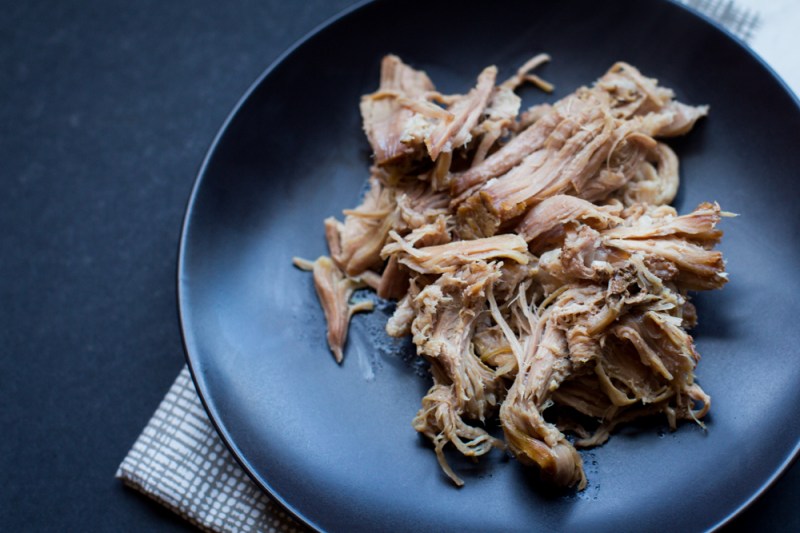
Kalua pig is one of Hawaii’s best-known dishes, and easily replicated at home. Traditionally, an entire pig is placed in an underground pit (“imu” in Hawaiian) that is lined with hot rocks and wrapped in banana leaves, then covered with a layer of soil and roasted overnight. Since we don’t have room in our back yard for an imu, nor access to a suckling pig and banana leaves, nor the desire to go through such a hassle, we just use a crock pot or french oven.
This recipe calls for about 6 lbs of pork butt, which is actually the upper half of a pig’s shoulder (the lower half is called the picnic cut, which can also be used). Pork butt is also often called a Boston butt or roast. You can also find the cut simply labeled as “pork shoulder”. Basically, any cut that’s labeled picnic, butt, shoulder or Boston should be fine.

